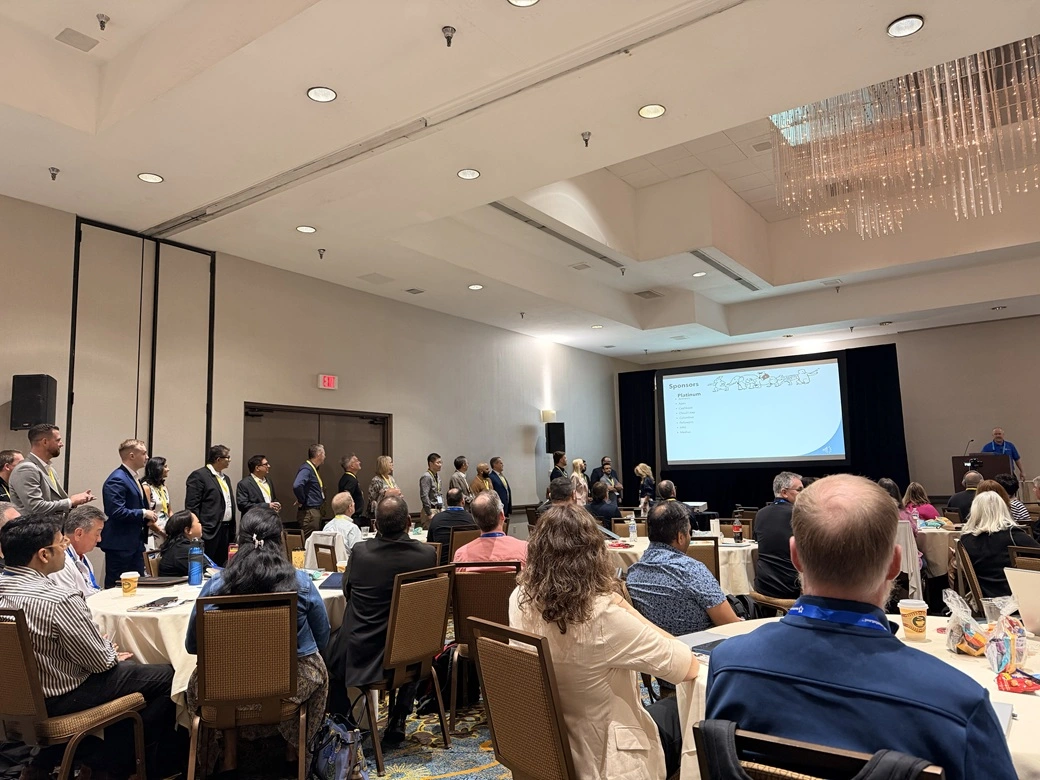
At the recent Annual M3 User Group Conference, Novacura highlighted a fundamental truth facing modern industrial enterprises: the ERP system itself is rarely the problem—the friction lies in how people interact with it. Through two distinct session deep-dives, we explored how a low-code layer can dismantle the “villains” of system complexity and data latency.
Session 1: Bridging the High-Volume Data Gap
In high-stakes environments – such as seasonal harvest or large-scale raw material intake – operational efficiency is often threatened by fragmented data and steep training barriers.
-
The Challenge: Traditional ERP interfaces often require “too many screens and too many clicks” for simple data entry. For seasonal staff with limited training windows, this complexity creates a “training gap” that results in data latency and inaccurate inventory visibility.
-
The Technical Bridge: Rather than resorting to risky core modifications, the solution involves deploying a low-code integration engine. By using a simplified mobile interface, workers can execute complex transactions – such as logging IDs and attributes – via a single, clean screen that communicates directly with ERP APIs.
-
The Result: This approach achieves real-time accuracy without the “administrative burden.” Companies gain the ability to deploy applications with minimal time-to-value, ensuring that even a temporary workforce can contribute to a 100% compliant data capture process.
Session 2: From “Ghost Data” to Precision Field Service
For organizations managing heavy machinery and field-based support, the “villain” is often a reliance on manual, analog reporting that hides critical KPIs.
-
The Challenge: When technicians capture time and meter readings in Excel or on paper, “ghost data” (delayed or disconnected information) paralyzes maintenance planning. This lack of real-time visibility often leads to system duplication, where staff use external tools to track work orders because the ERP feels inaccessible in the field.
-
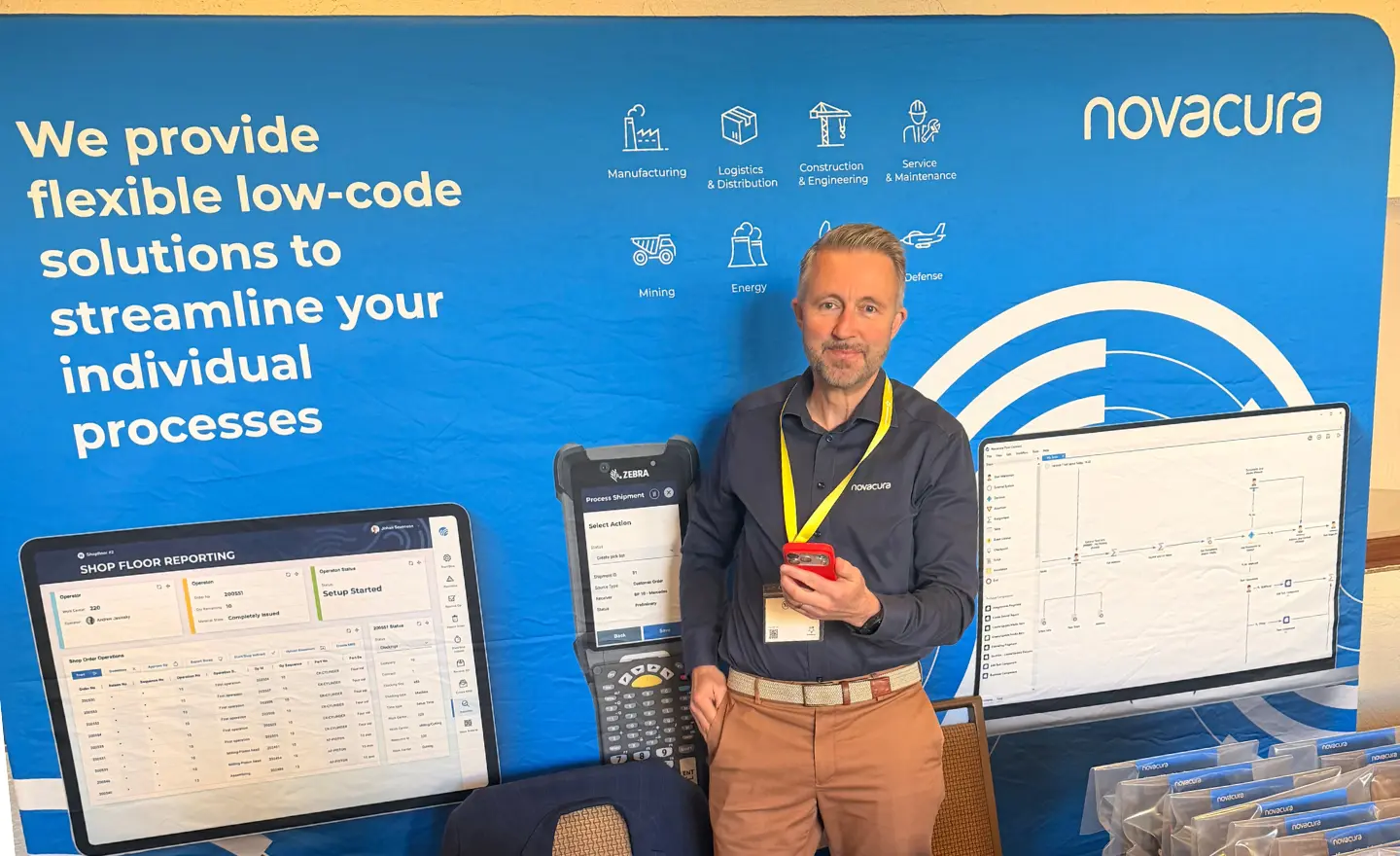
The Mobile Layer: The strategy presented involved a process-oriented mobile layer that provides technicians with a centralized “inbox” of assigned jobs. By enforcing automated data capture – including meter readings and photo attachments- at the source, the solution ensures all maintenance and warranty data is linked to the system of record in real-time.
-
The Result: The result is a total elimination of double entry. By removing the need for office staff to re-key data, organizations shift from reactive maintenance to precision-driven operations, ensuring equipment uptime and long-term scalability.
Strategic Insight: The Power of the Optimization Layer
As demonstrated in these sessions, “Sage-level” digital transformation does not require replacing the ERP. Instead, it requires a process-optimizing layer that acts as a technical bridge. By removing the ERP’s complexity for the end-user while maintaining its role as the “single source of truth,” Novacura Flow allows manufacturing and logistics managers to achieve enhanced supply chain visibility and superior operational flow.

 April 16, 2026
  5 min to read