A clear direction from IFS, and a good moment to look at how work really gets done in the field.
IFS Cloud keeps moving forward. One of the most significant steps for service organizations is the shift of customer service from Work Order-based Service Management to Request Management in Service Lifecycle Management (SLM). Together with IFS’s investment in industrial AI, it points to a more modern, more connected service platform.
For the teams who run the field every day, a change like this raises practical questions. Does it affect us? How much of our process needs to change? And how do we keep the technician’s day simple while the platform moves forward? This article answers those questions, and explains why the technician’s side of the process deserves attention now, not later.
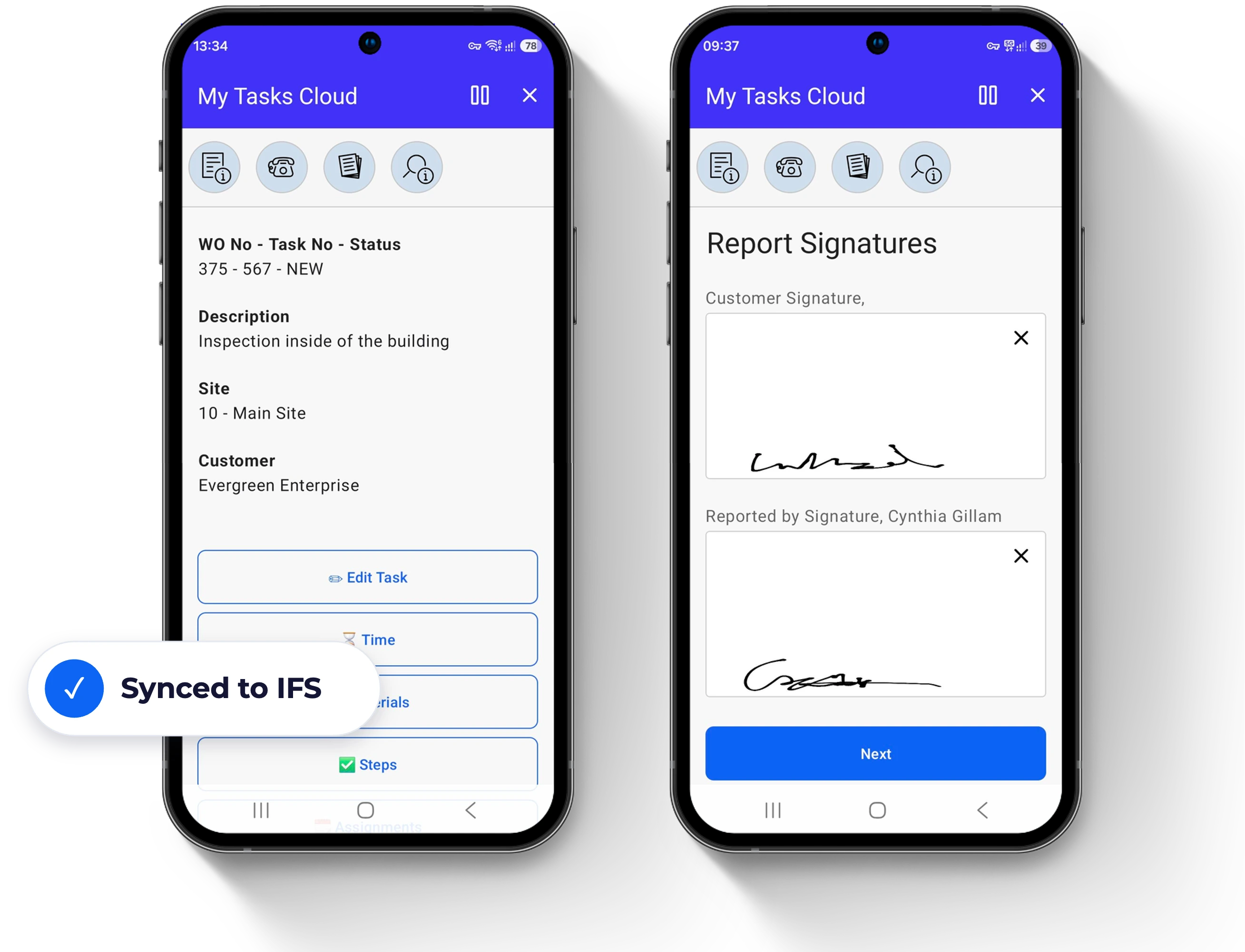
Novacura Mobile Work Order for IFS: the technician’s side of the service process, connected to IFS.
What is changing in IFS Cloud
In IFS, field work has traditionally been organized around Work Orders and Work Tasks. For customer service, IFS is now building its future process on Request Management within Service Lifecycle Management. The request, rather than the Work Order, becomes the centre of the customer service flow, from the first contact through to completion.
It’s an evolution, not an overnight switch. At the time of writing, IFS has not committed to a firm end date for Work Order-based Service Management, and has indicated that the move will be supported by migration tooling. That gives customers time, and it makes this the right moment to plan rather than react.
Who is affected, and who isn't
The most important thing to understand is that the change does not apply to all field work in the same way. IFS separates customer service from internal maintenance, and the two follow different paths:
|
|
Customer service (ESM) |
Internal maintenance (EAM) |
|
Typical work |
Technicians visiting external customers’ sites and equipment |
Maintenance of your own plants, fleet, buildings and assets |
|
Process model in IFS Cloud |
Moving from Work Order-based Service Management to Request Management in Service Lifecycle Management (SLM) |
Stays on Work Orders and Work Tasks |
|
What to do now |
Plan ahead: map how your service process translates to Request Management |
No structural change needed; a good time to review the technician experience |
Quick gut check: if your technicians serve external customers through Work Orders in IFS today, this change concerns you, even if nobody on your team has raised it yet. If they maintain your own assets, your core process stays as it is.
Why it's worth planning now
Because there’s no fixed deadline, it’s tempting to wait. But the move to Request Management is less a technical upgrade than a process change, and process changes take time to get right. Planning early pays off in three ways:
1. Your service process becomes visible
Many service organizations have grown their field process over years: special steps for key customers, workarounds for missing parts, local habits per region. Mapping that process to Request Management is a chance to see what really happens in the field, and decide what to keep, simplify or retire.
2. The technician’s day is protected
A new back-end model should not mean a harder day for the people on site. Technicians care about getting to the job, understanding it, doing it and closing it. If the change is planned only from the ERP side, that experience can easily get more complicated. Planned early, it can get simpler.
3. Field data stays complete and on time
Time, materials, findings and the customer’s sign-off are created in the field. They feed invoicing, planning and service history in IFS. A transition is exactly the moment when that data is at risk of arriving late or incomplete, unless the field process is designed for it from the start.
The real challenge: the gap between operations and the ERP
The change in IFS Cloud highlights something that was true long before it: ERP systems are built around business objects, while technicians work around jobs. IFS is the right system of record for Work Orders, requests, assets, materials and financials. But a technician standing next to a machine, often offline, doesn’t need the ERP. They need the next step of their job, in the right order, on a phone or tablet.
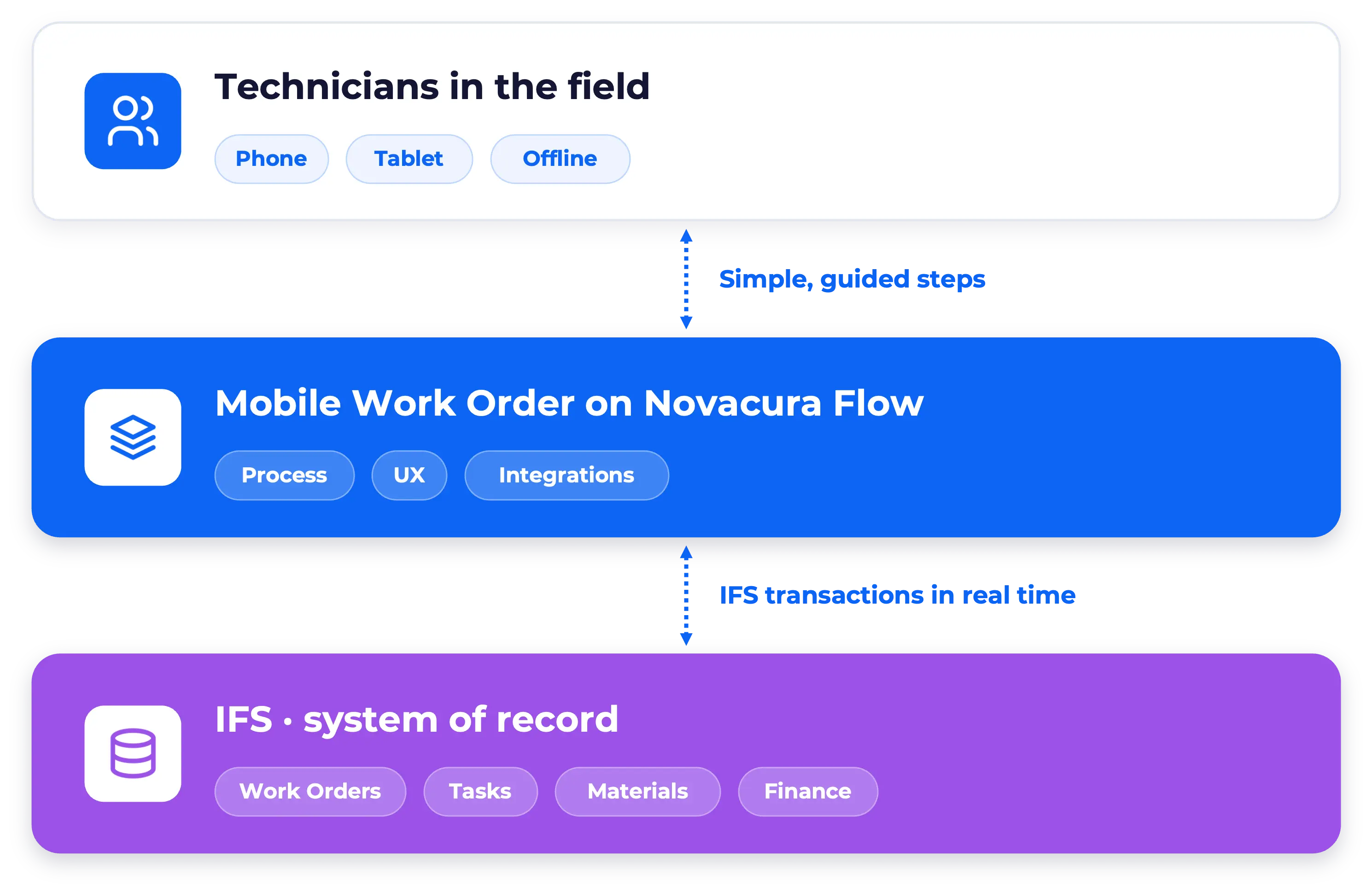
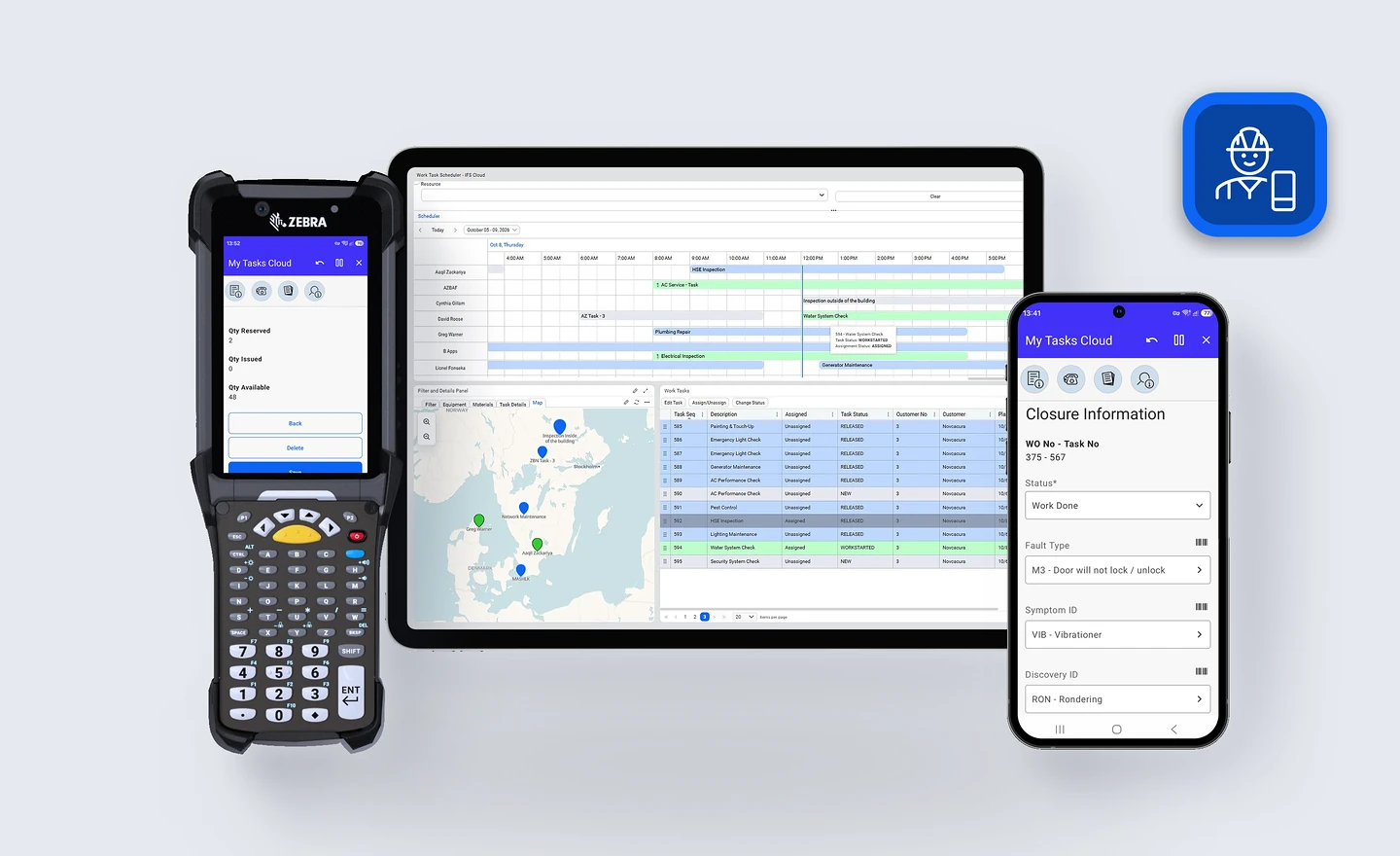
Closing that gap doesn’t require a second system next to IFS. It requires a layer that turns IFS processes into a simple, guided field experience, and sends every action back to IFS as it happens. That’s where Novacura comes in.
Bridging operations and the ERP: technicians work in simple, guided steps, and every action becomes an IFS transaction in real time.
How Novacura helps IFS customers through the change
Novacura has been an IFS partner since 2015 and is an IFS Gold Channel Partner. Our role is to extend IFS, never to compete with it. With Novacura Flow and Mobile Work Order for IFS, we bridge the gap between operations and the ERP.
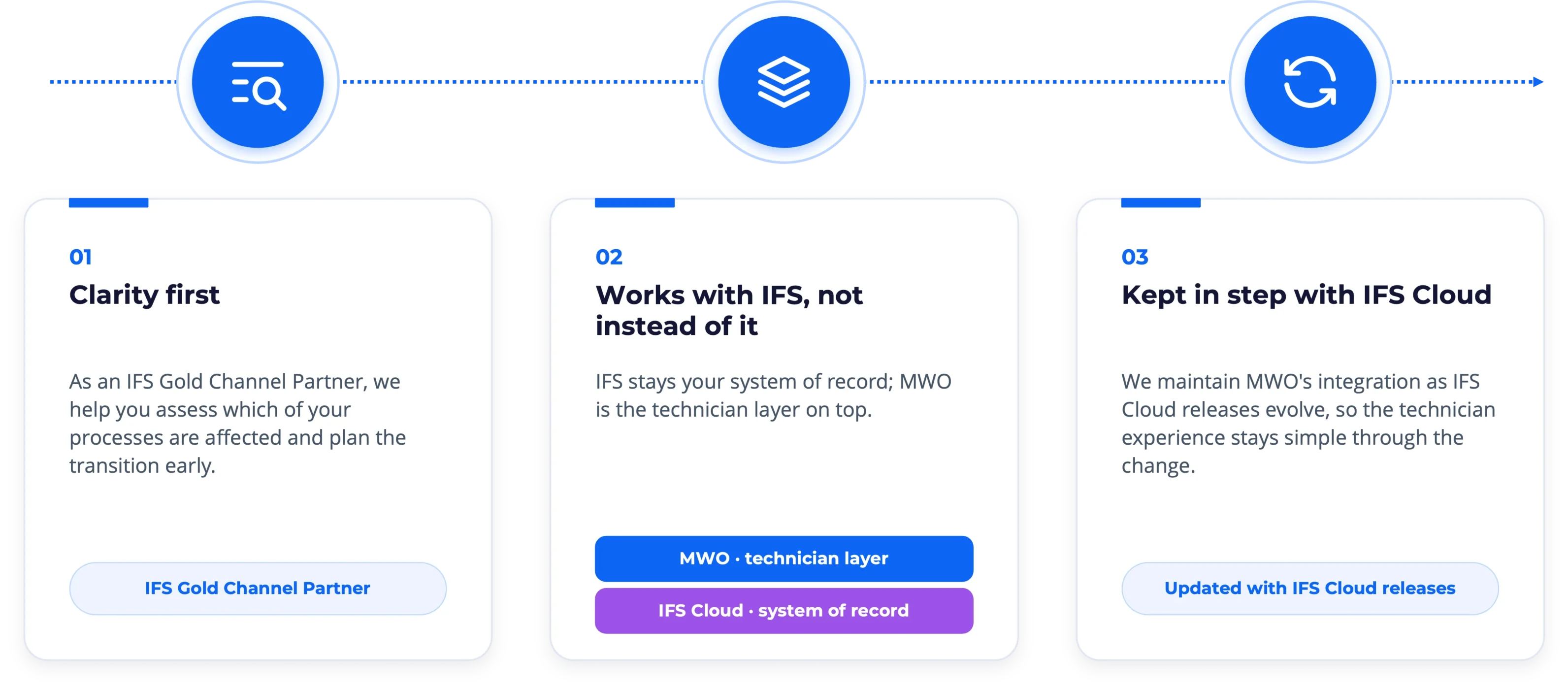
A steady path through the change.
Clarity first
We help you assess which of your processes are affected by the move to Request Management, which are not, and what the transition means for your technicians, planners and back office. You get a realistic plan, not a big-bang project.
A technician experience built on IFS
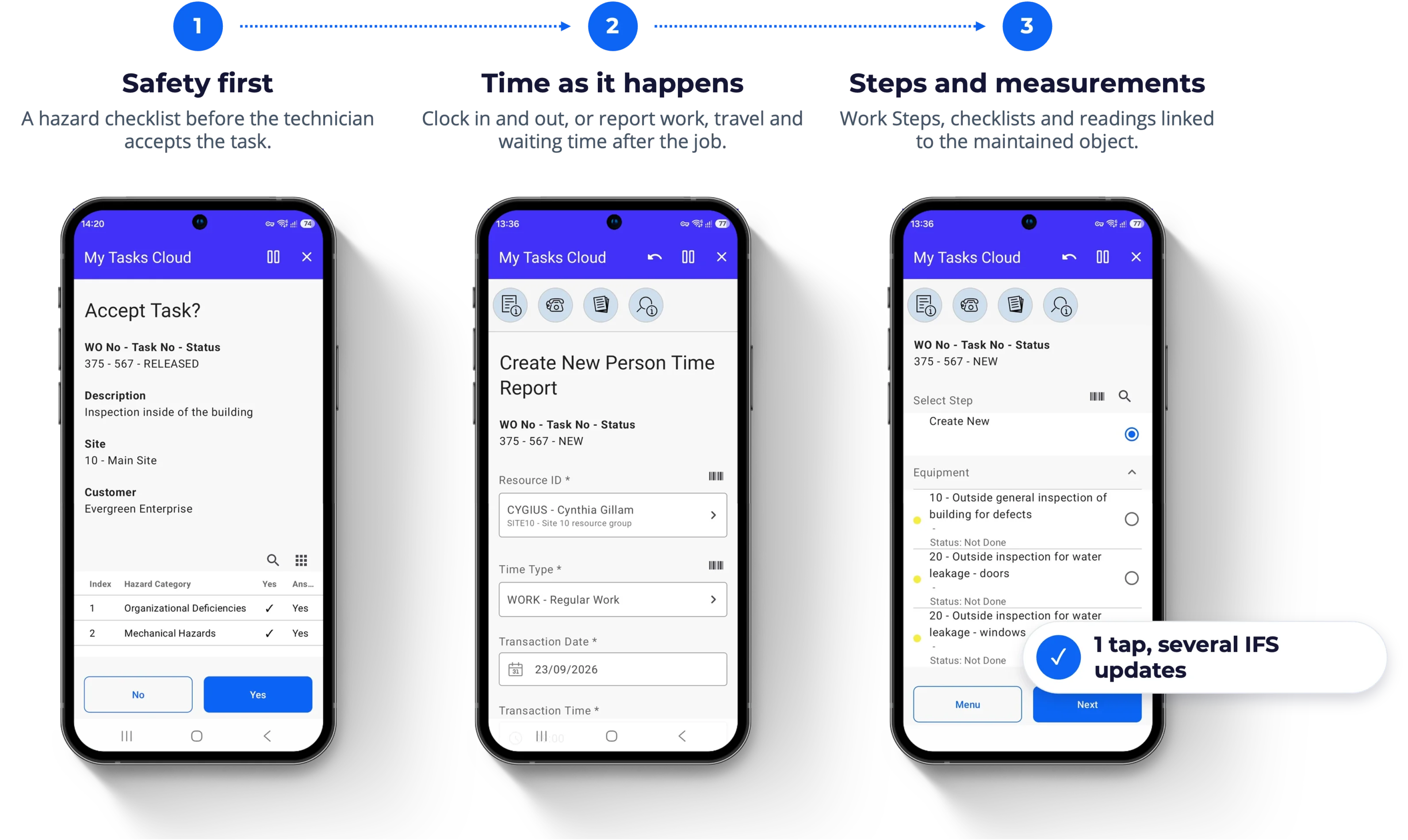
Mobile Work Order for IFS is a ready-made field service app built on IFS business objects. It covers the whole visit, from assignment and work context to execution, materials, completion with customer signature, and invoicing, online or offline. For internal maintenance and inspections, which stay on Work Orders and Work Tasks, it’s ready to adapt to your sites and assets today.
Work Execution in Mobile Work Order: the process asks for the right information at the moment it matters.
Adaptable as your process moves
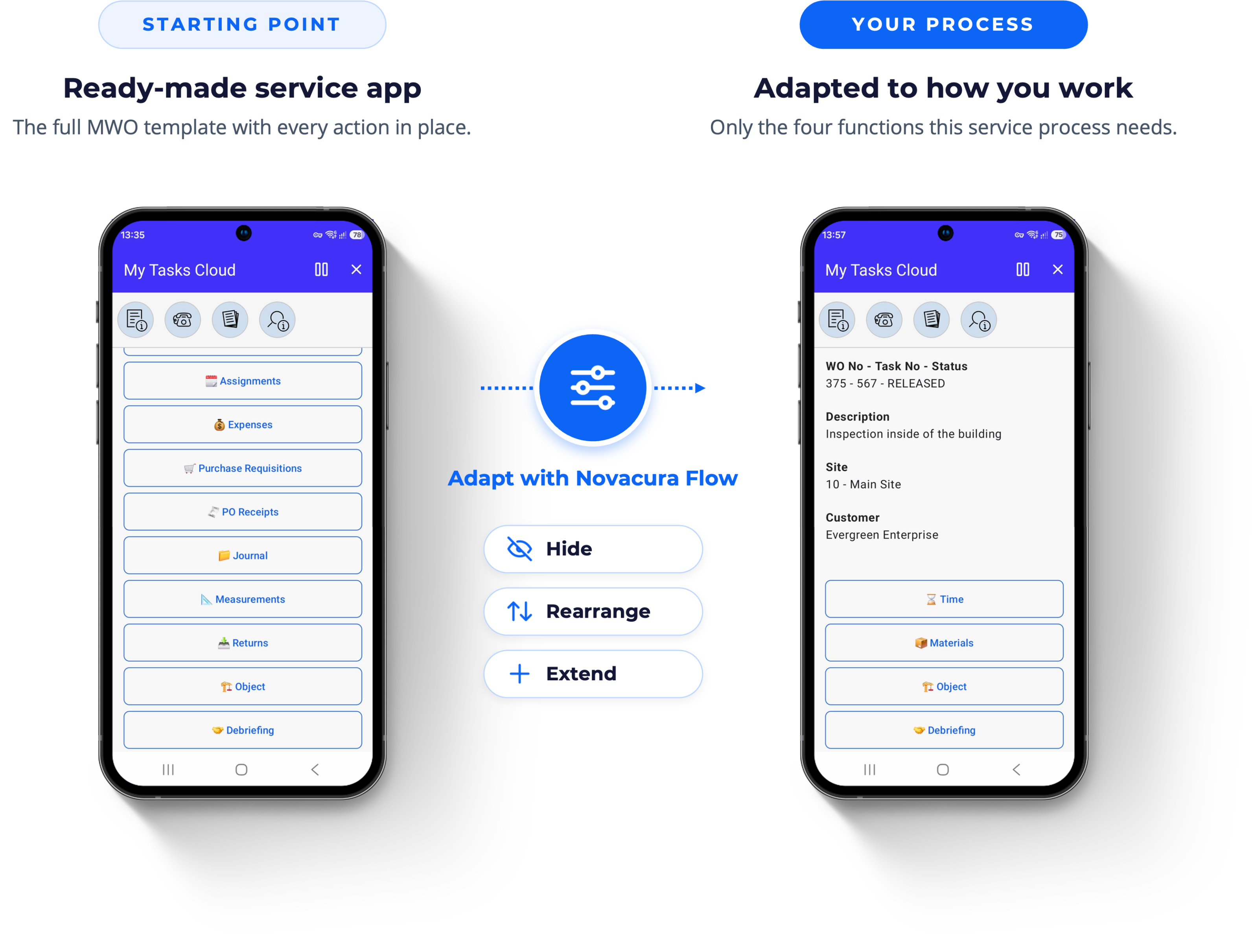
Because Mobile Work Order is built on Novacura Flow, it’s a starting point, not a fixed system. You keep the functions your technicians need, hide the ones they don’t, and adapt steps, screens and logic as your service process evolves.
A starting point, not a fixed system: the same app, simplified for one service process.
Kept in step with IFS Cloud
IFS Cloud follows an evergreen release model. We maintain Mobile Work Order’s IFS integration as releases evolve, using supported integration mechanisms, so IFS stays your system of record and the technician experience stays simple through every update.
Where to start
You don’t need a finished plan before you talk to us. A practical first step looks like this:
- Map how your technicians work today. Work Orders, Work Tasks, materials, time reporting and how a visit is closed.
- Check what changes for you on IFS Cloud. Separate customer service from internal maintenance.
- Decide what the technician’s day should look like. Keep what works, simplify what doesn’t, add what’s missing.
- Pilot with real technicians, then roll out. Validate in the field, not only on paper, and keep improving after go-live.
Let's map your service visit
Tell us how your technicians work today. We’ll show you which parts of your process are affected by the change in IFS Cloud, which Mobile Work Order building blocks fit, and what we’d adapt, on your own IFS objects.