

Optimization Across Multiple Time Horizons:
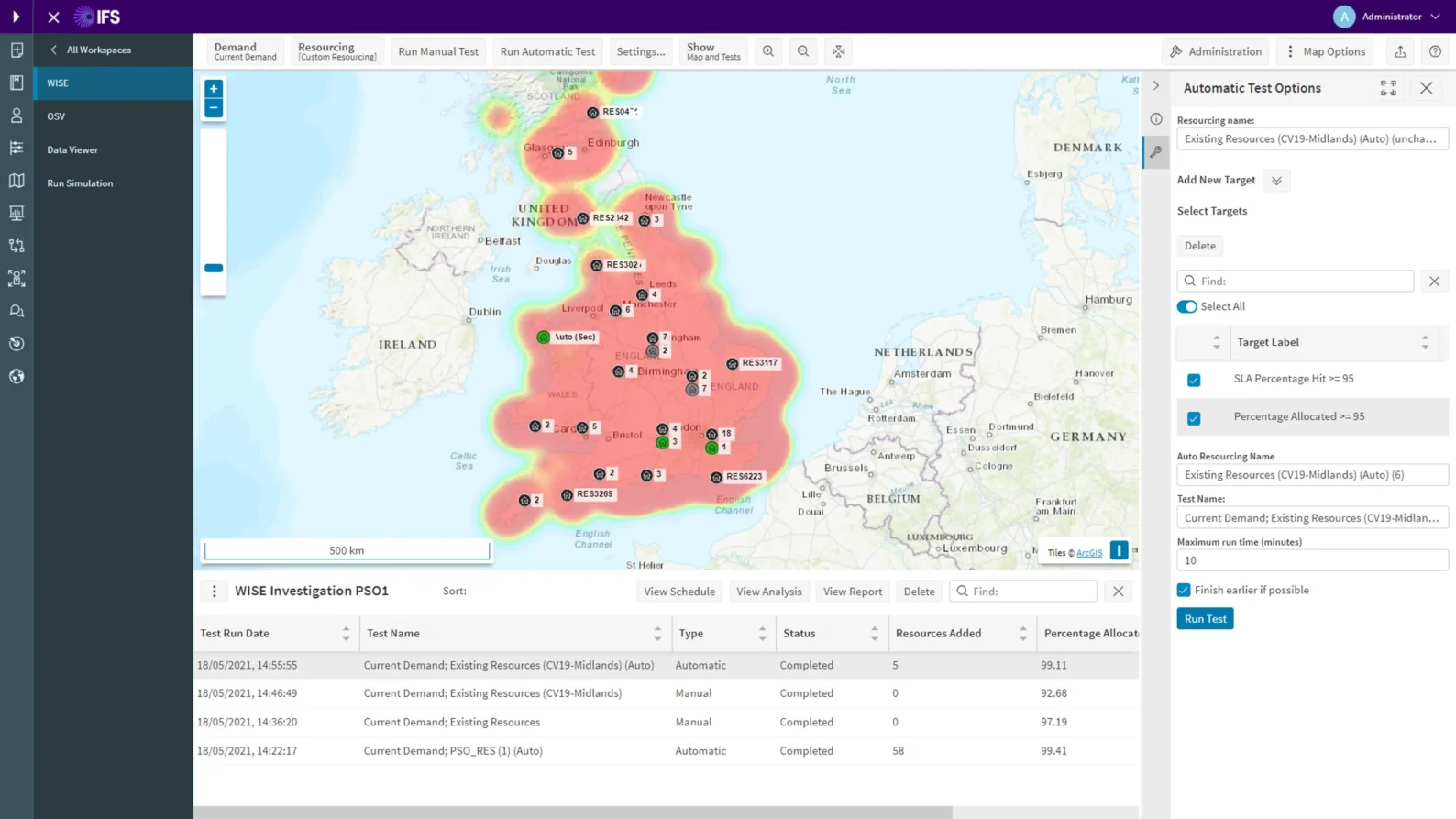
STRATEGIC (3–12+ months): Resource Forecasting (WISE)
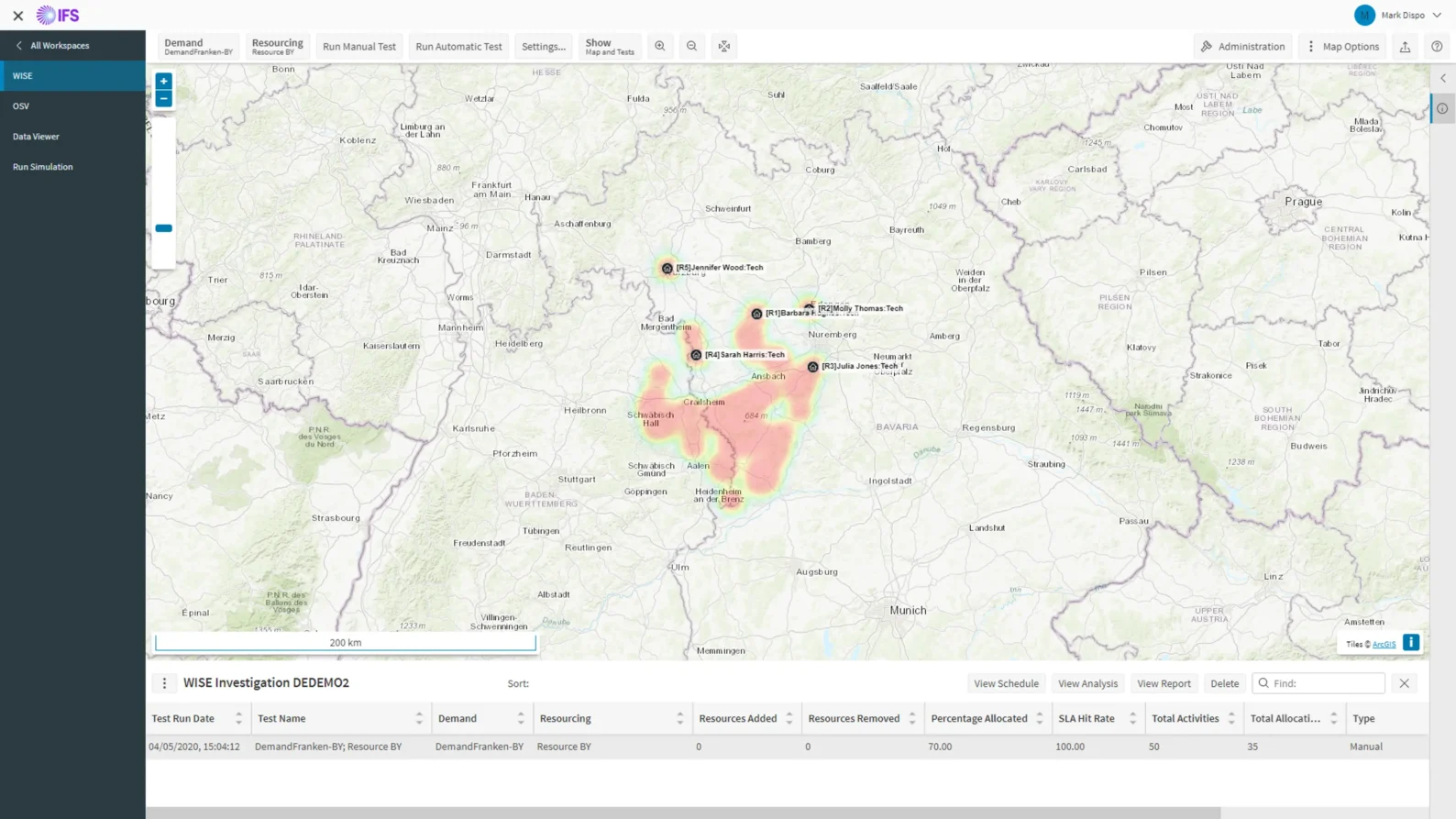
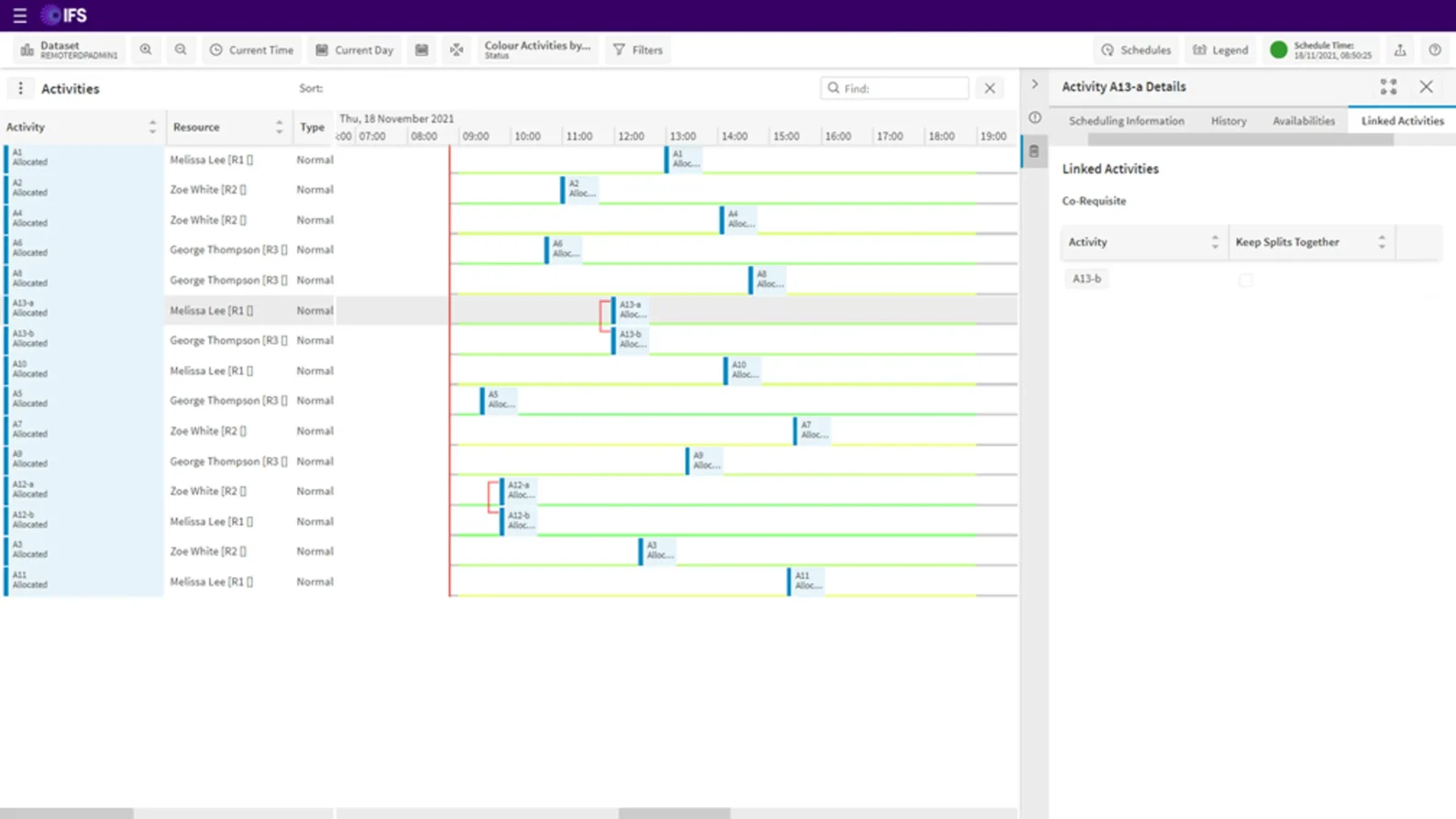
The What If Scenario Explorer (WISE) module is an advanced planning tool that simulates forecasted demand to generate predicted workloads. It helps determine how many new resources are needed, the skills they should possess, and where to recruit them. WISE supports planning for changes in both demand and resource availability.
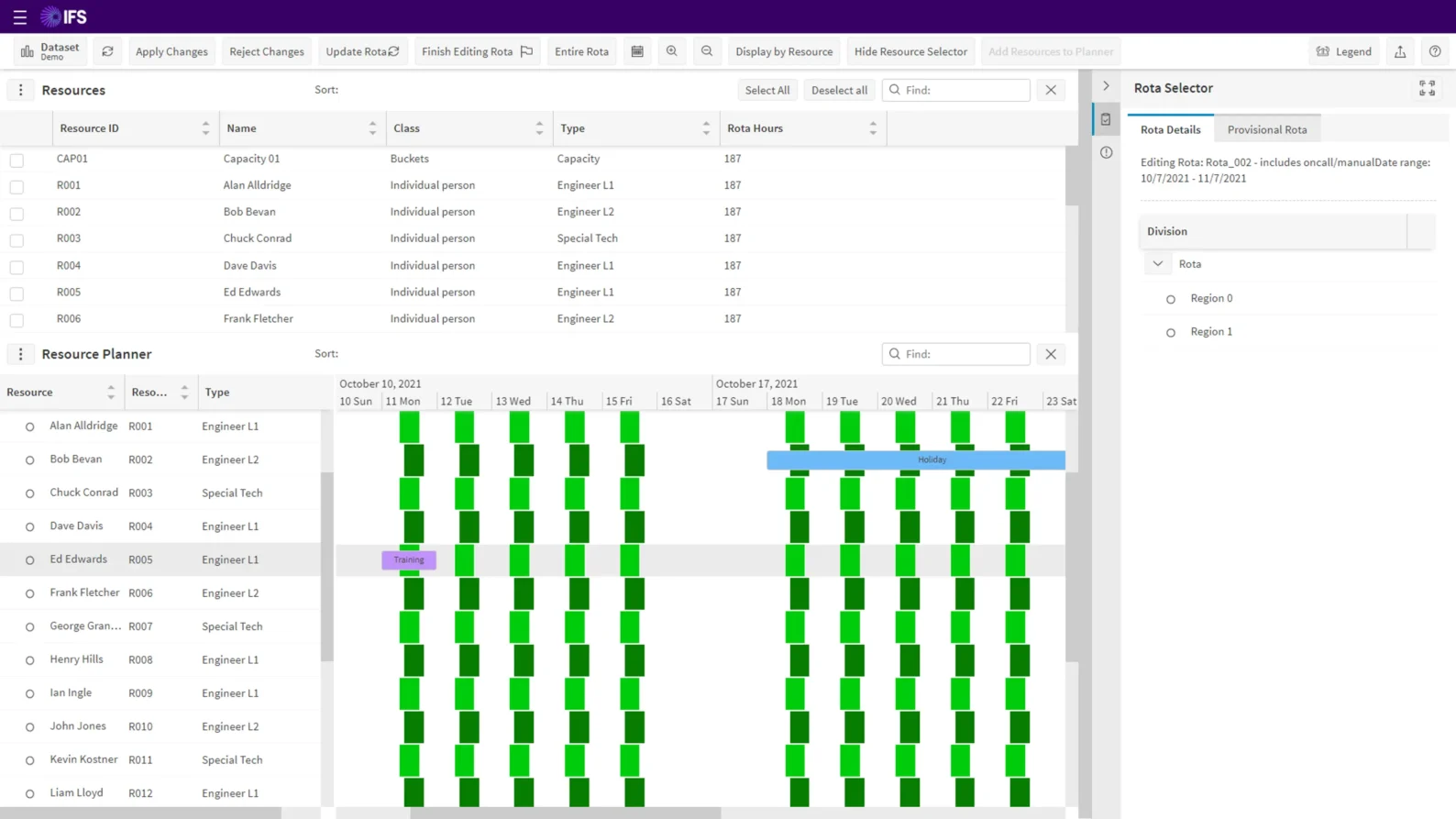
TACTICAL (1–6 months): Shift Planning / Advanced Resource Planner (ARP)
Ensures optimal staffing based on business forecasts. The Advanced Resource Planner provides tools to plan shifts up to 12 months in advance, define shift patterns, and account for overtime, holidays, absences, and training.
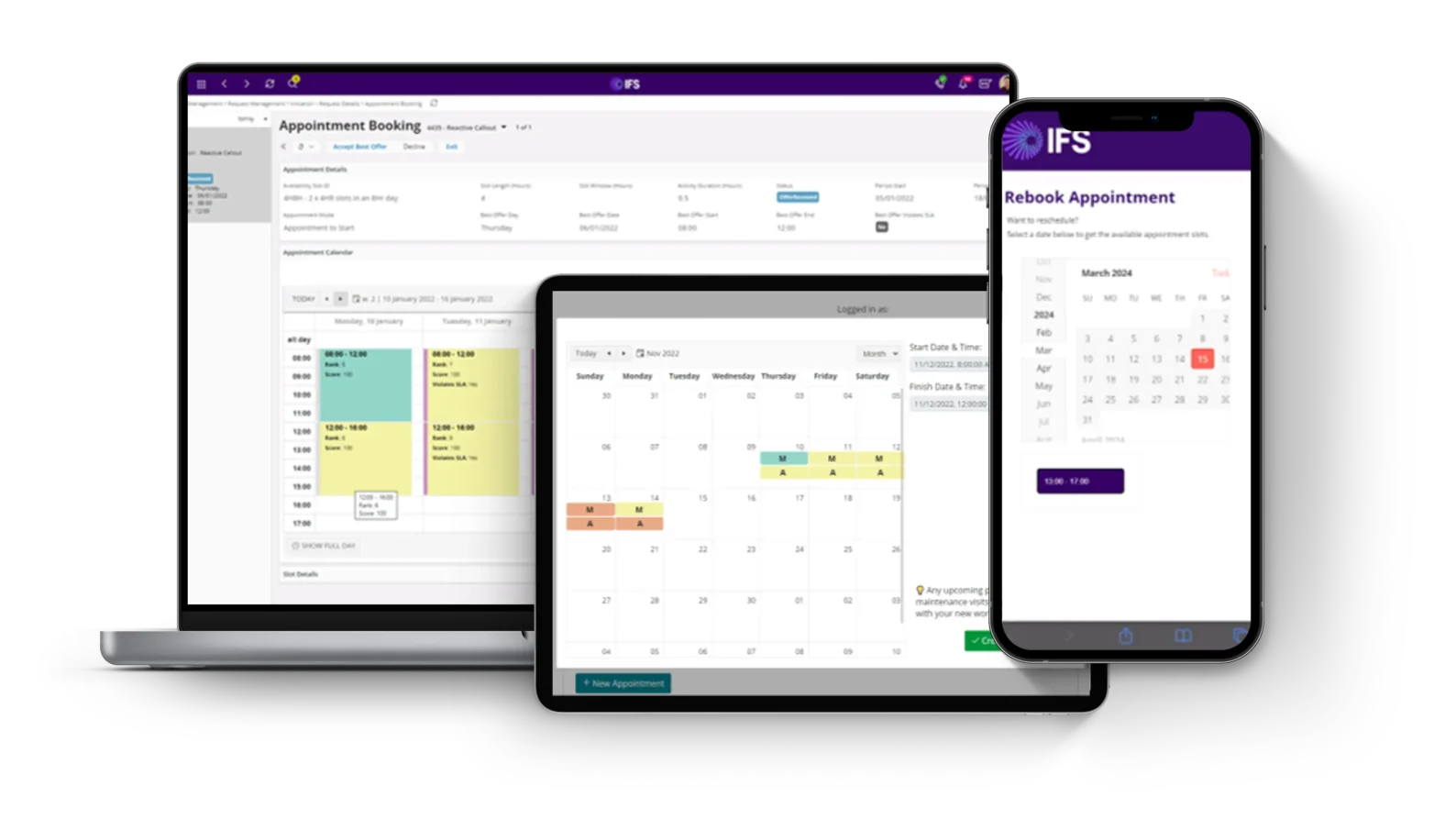
OPERATIONAL (1–4 weeks): Intelligent Appointment Booking Engine
Dynamically schedules appointments using real-time capacity analysis.
It utilizes an optimization algorithm to rank available slots based on cost to perform, helping to cluster work, reduce travel time, and increase productivity.
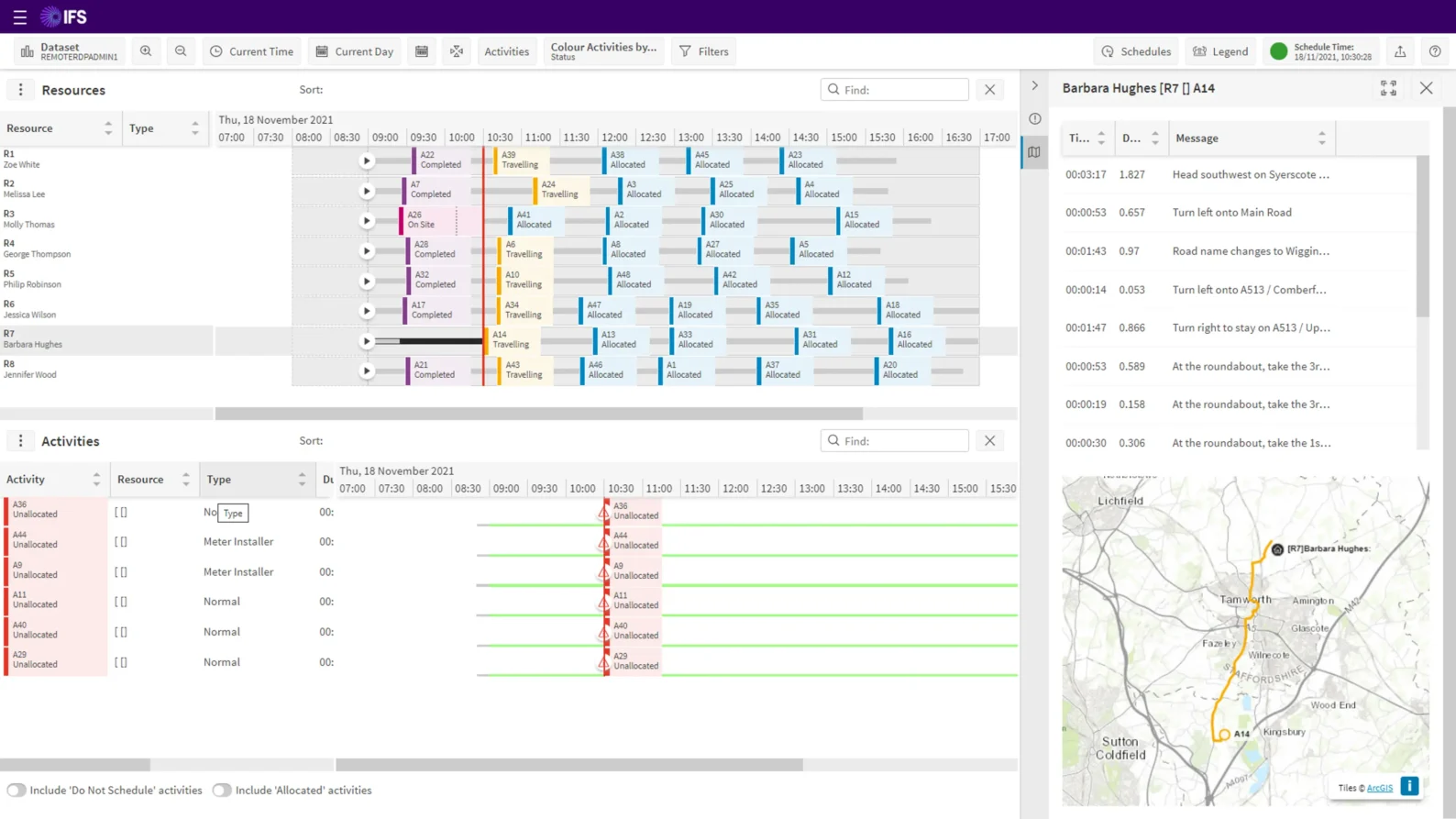
REAL-TIME (0–7 days): Dynamic Scheduling Engine (DSE)
Provides continuous optimization (“Always Optimising”) to react immediately to updates and unexpected events.
It continually searches for opportunities to improve the plan.
Key Differentiating Elements Of IFS PSO:
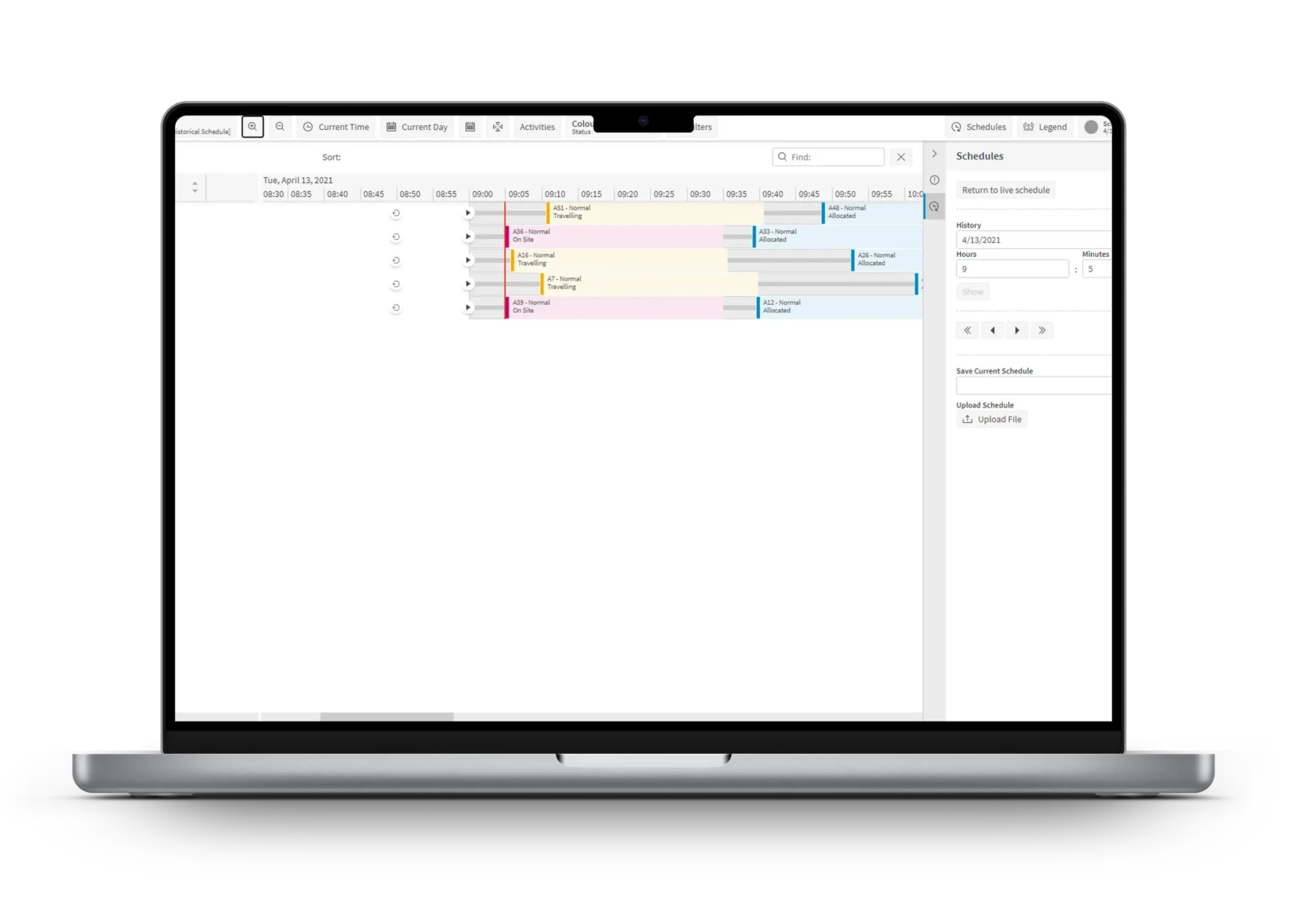
Continuous, AI-Powered Optimization
- IFS continuously optimizes your schedule. It is not limited by runtime and does not use separate optimizations for overnight and in-day changes (batch-based).
- The system uses 35 different algorithms (or 36 algorithms) and uses AI to automatically select the combination that provides the most improvement to the schedule at any time without stopping.
- Continuous optimization results in more automation and less intervention and can achieve scheduling automation of 95% and above (up to 99% achieved by some customers).
Scalability and Flexible Constraints
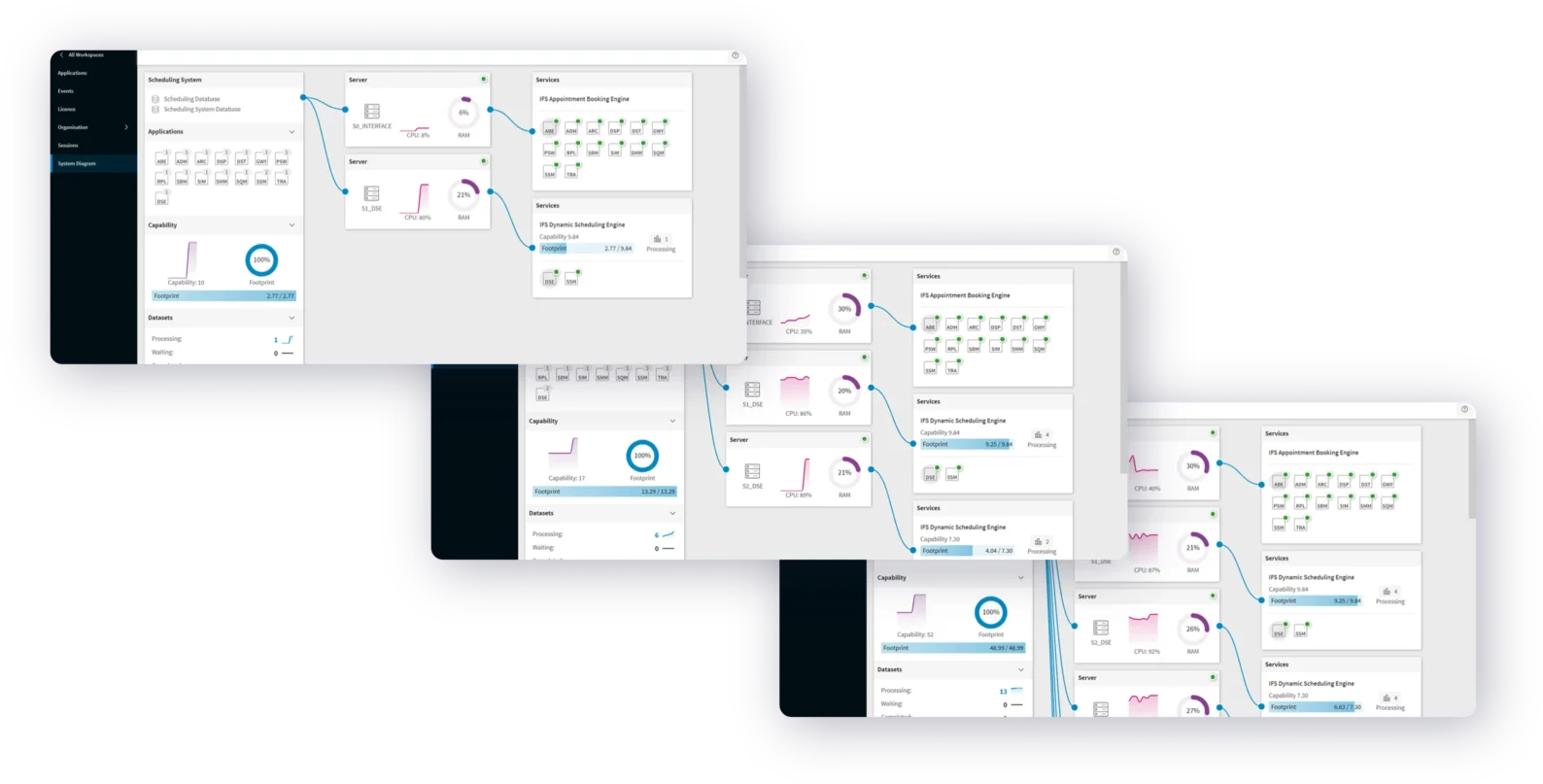
- IFS PSO is built for scale, capable of handling up to 15x more jobs in a single scheduling scenario than competing solutions.
- This superior scalability reduces the need to divide field teams into smaller regions (work zones), resulting in more flexible service boundaries.
- Scheduling is based on flexible soft constraints, which more accurately reflect real-world behavior, unlike rigid hard constraints that often lead to costly scheduling decisions.
Value-Based Prioritization Model
- Scheduling decisions are driven by the objective of maximizing Service Margin.
- The system models the value of each job (e.g., importance, criticality, customer satisfaction, contract value) against the cost of performing it (e.g., resource, travel, overtime, and shift costs).
- This approach ensures precise control over schedule behavior and supports advanced SLA management beyond the initial commitment window, enabling automatic handling of missed SLAs without manual intervention.
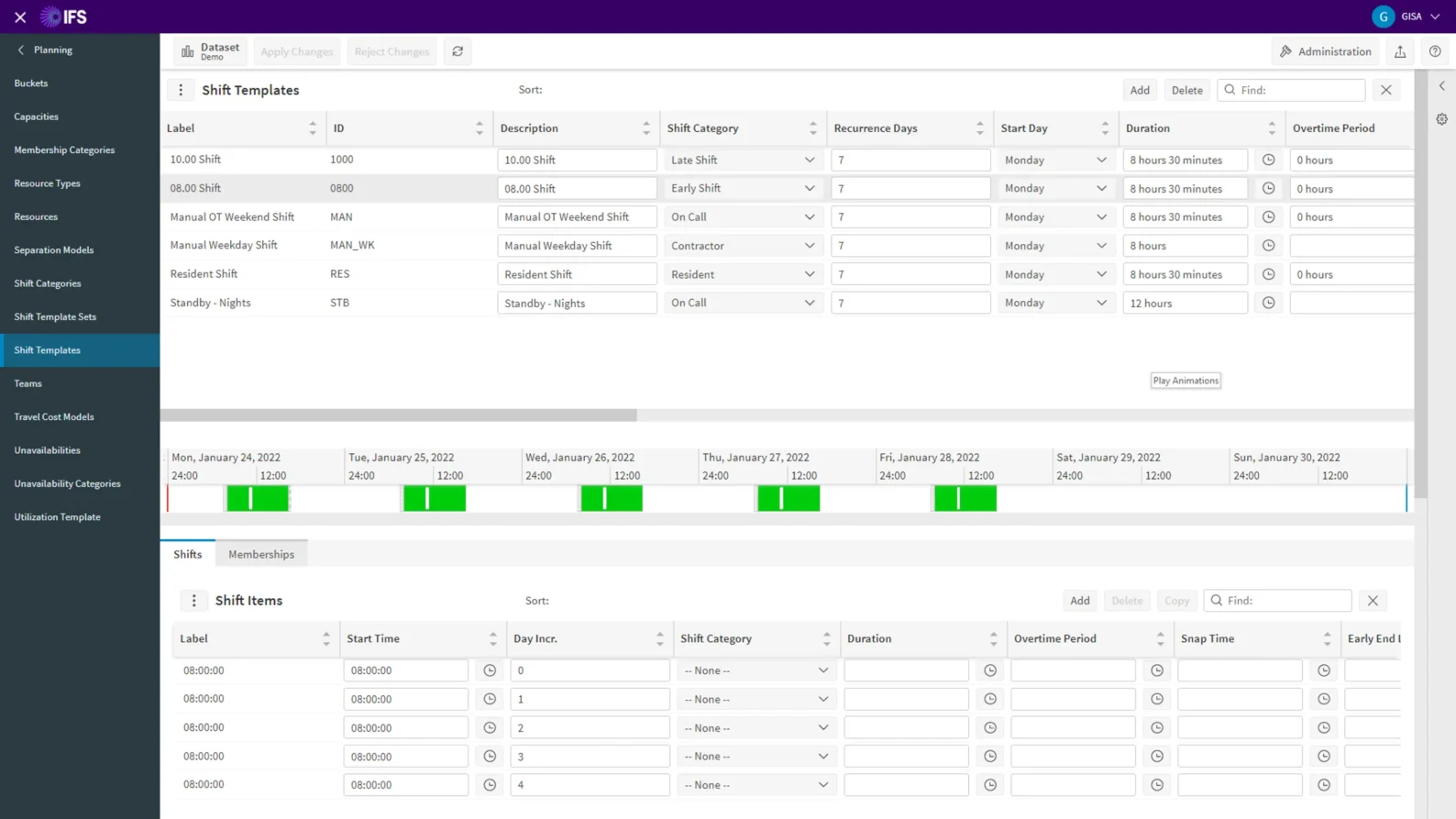
Key Functionalities Of IFS PSO :
What If Scenario Explorer (WISE)
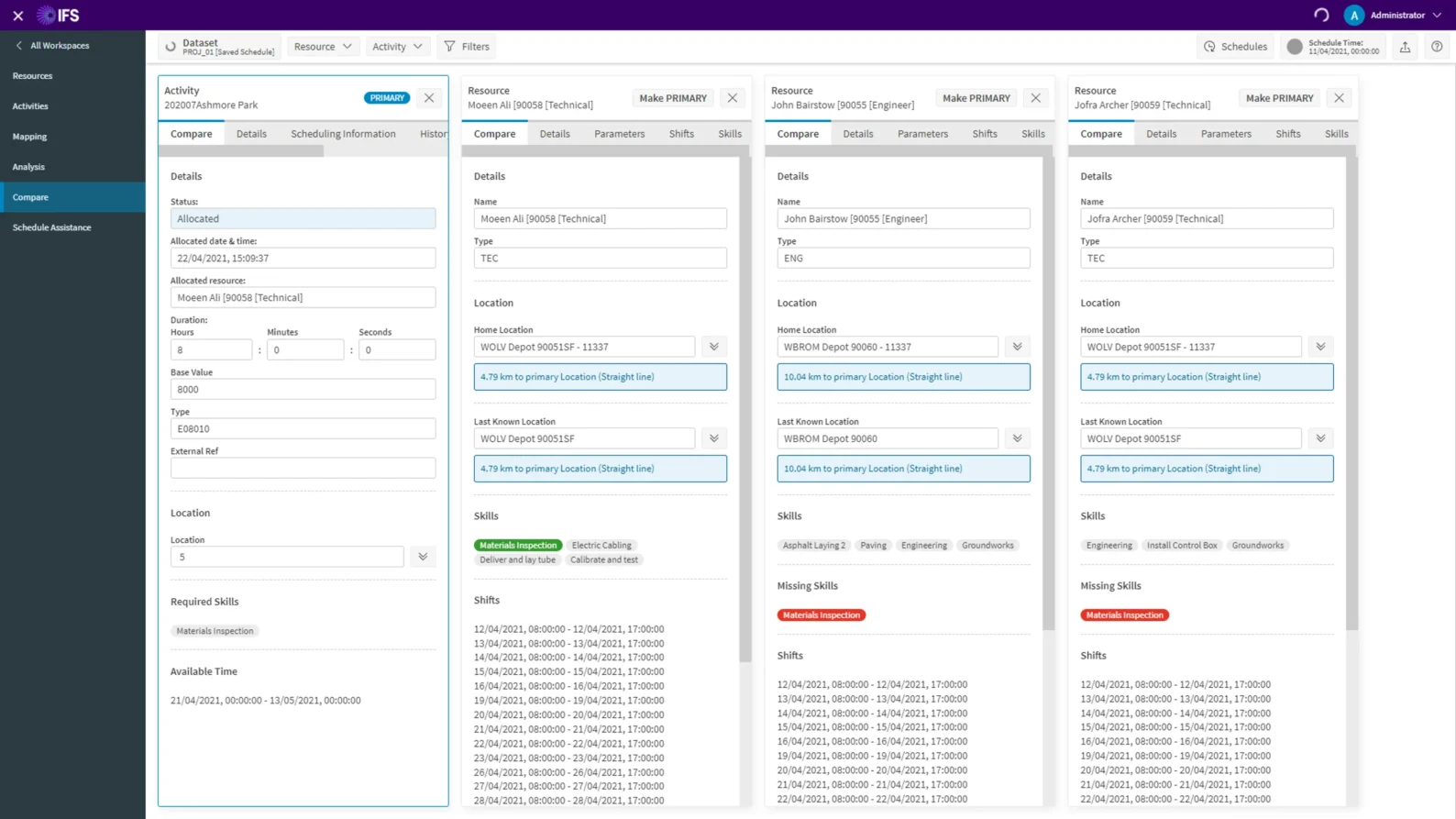
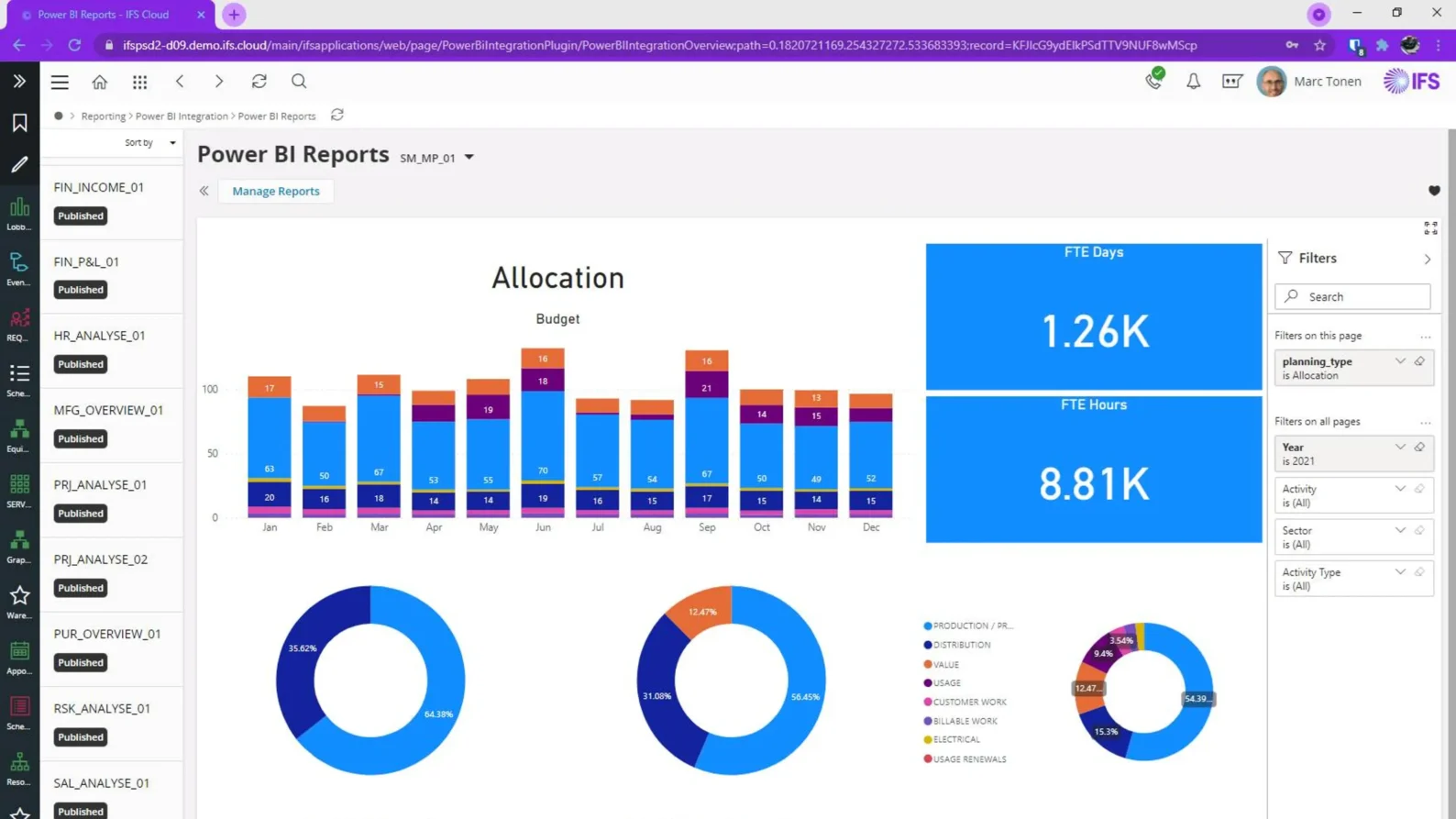
WISE is a strategic forecasting tool that leverages Industrial AI to simulate future business events in a safe, controlled workspace. It addresses critical resourcing questions, determining staff headcount, required skills, and optimal resource locations. WISE simulations deliver actionable insights—for example, recommending re-training just one technician out of 669 to increase allocations from 86% to 97.95% and achieve automation goals. This approach reduces risk and supports more informed hiring decisions.
Dynamic Scheduling Engine (DSE) and Continuous Optimization
The core DSE engine uses Continuous Optimization (“Always Optimising”), leveraging 35 algorithms automatically selected by AI. Scheduling decisions are driven by a unique Value vs. Cost model to maximize Service Margin. This approach ensures that the highest-value work is prioritized at the lowest cost, achieving high automation - typically 95% or more.
Intelligent Appointment Booking Engine (ABE)
The ABE operates based on real schedule dynamics (it is not a static “bucket” system) and ranks available slots according to the cost of performing the job. This encourages the selection of slots that effectively cluster appointments, reducing travel time and increasing productivity. Granular Capacity Management is achieved through Shift and Slot Utilization Rules, which automatically reserve capacity for reactive work such as emergencies.

Superior Scaling and Flexible Constraints
IFS PSO is built for enterprise scale and can handle up to 15 times more jobs in a single scheduling problem than other solutions. This superior scalability eliminates the need to divide field teams into small, fixed regions, enabling more flexible regional boundaries. Scheduling uses adaptable soft constraints instead of rigid rules, providing a closer match to complex, real-world decision-making.
Advanced Travel Optimization and EV Support
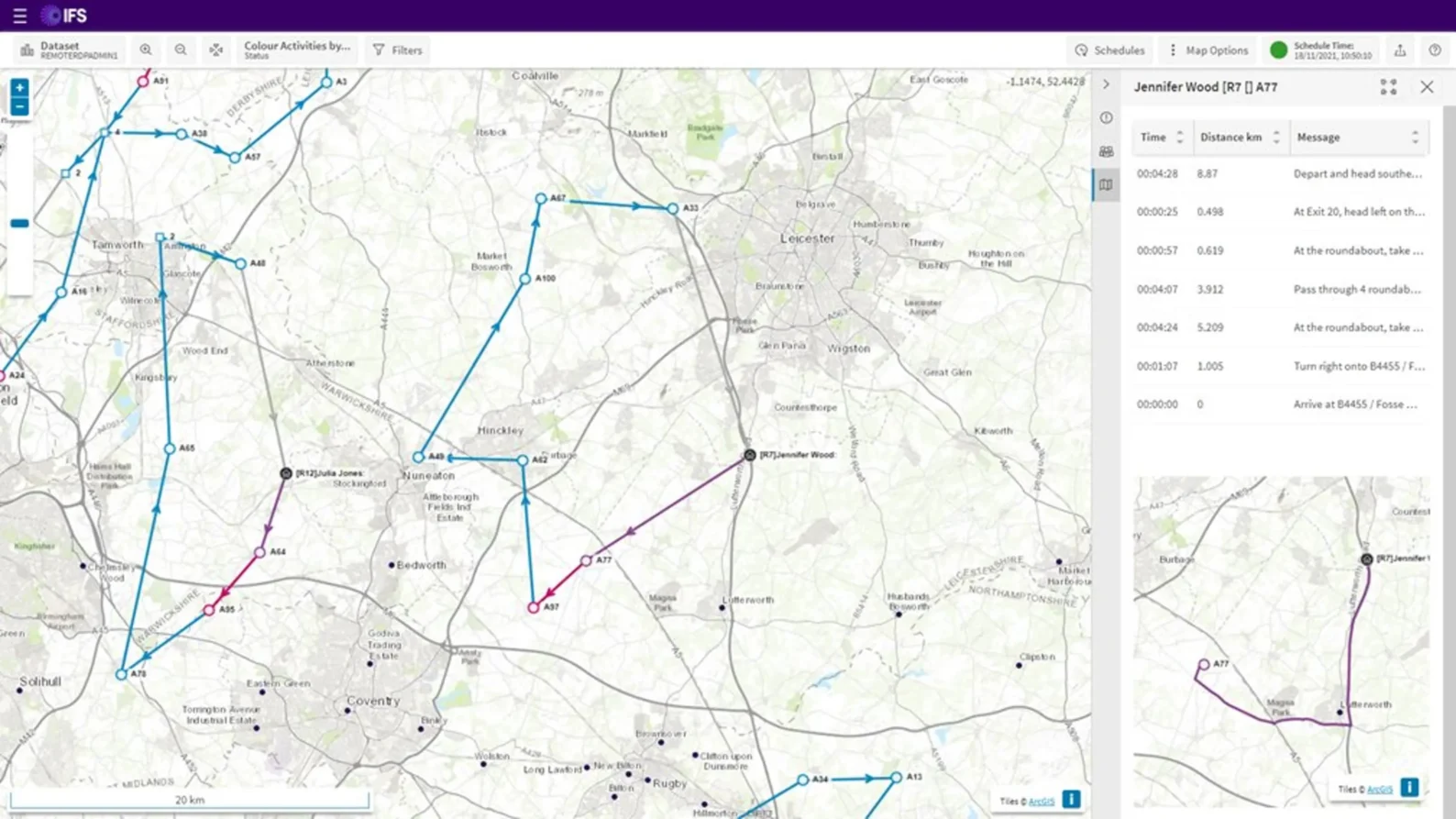
Travel time estimates are highly accurate, scalable, and predictive. IFS uses TomTom road network data derived from more than 600 million devices (including OEMs and Uber drivers) and leverages predictive travel through Automated Intelligent Travel Profiles (AITP). The system continually updates plans using GPS fixes and offers a real-time traffic option. Future enhancements include calculating the maximum range of electric vehicles (EVs) and dynamically planning recharging visits using existing “Depot” functionality.

Measurable Business Benefits:
Cost Reduction and Operational Efficiency
IFS PSO drives fundamental improvements in resource allocation and cost control by optimizing every decision against the core objective: maximizing the service margin.
- Travel time reductions: up to 35%. By utilizing AI and Automated Intelligent Travel Profiles (AITP), PSO delivers highly accurate, predictive routing, resulting in shorter travel distances, reduced fuel costs, and decreased field emissions.
- Average cost-per-job reduction: up to 76%. This figure reflects cumulative efficiency gains from reduced travel, optimized resource usage, and decreased reliance on high-cost alternatives.
• Subcontractor spend reduction: up to 49%. Strategic planning using WISE, combined with maximizing internal resource utilization, minimizes the need for external contractors. - Overtime reductions: up to 50%. Automated scheduling eliminates unnecessary manual work and ensures technicians complete their shifts optimally.
Service Quality and Field Productivity
The Continuous Optimization approach ensures that quality metrics and service commitments are perpetually prioritized, driving significant gains in customer satisfaction.
- SLA Compliance Improvement: Up to 81%. IFS PSO ensures better adherence to customer deadlines by using Value-Based Scheduling to manage SLA achievement and importance over time, even beyond the initial commitment window.
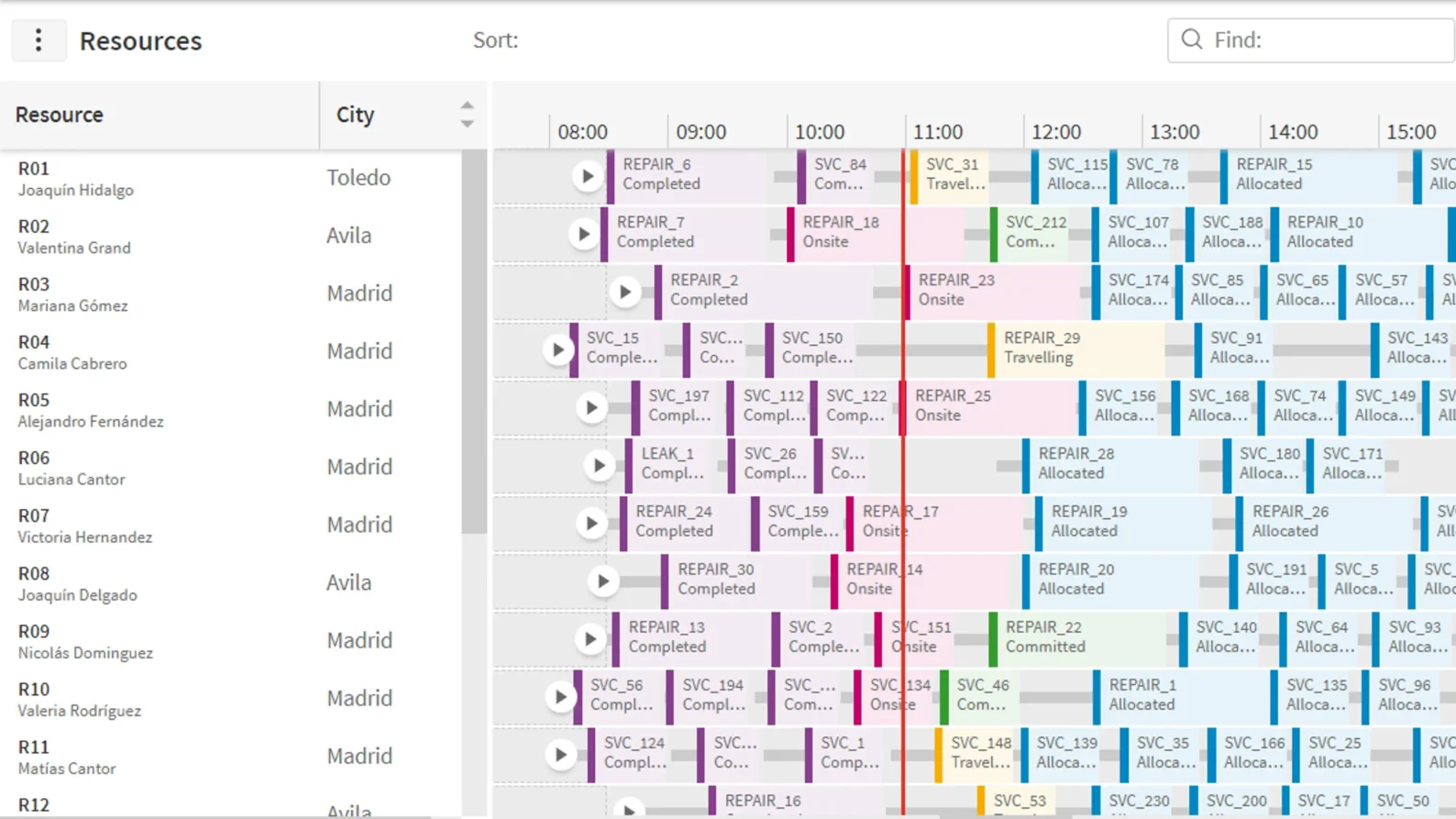
- Jobs/Visits per Day Increase: Up to 24%. Increased throughput is achieved through intelligent job clustering, accurate travel calculation, and higher utilization rates.
- Technician Utilization Improvement: Up to 28%. By continuously feeding jobs dynamically, the DSE eliminates "white space," ensuring the field team spends more time on high-value tasks.
- Improved FTFR (First-Time-Fix-Rate): Up to 10%. Optimization ensures that the right person, with the right skills and parts, is assigned to the task, minimizing return visits.
Intelligent Appointment Booking Engine (ABE)
The ABE operates based on real schedule dynamics (it is not a static “bucket” system) and ranks available slots according to the cost of performing the job. This encourages the selection of slots that effectively cluster appointments, reducing travel time and increasing productivity. Granular Capacity Management is achieved through Shift and Slot Utilization Rules, which automatically reserve capacity for reactive work such as emergencies.
Superior Scaling and Flexible Constraints
IFS PSO is built for enterprise scale and can handle up to 15 times more jobs in a single scheduling problem than other solutions. This superior scalability eliminates the need to divide field teams into small, fixed regions, enabling more flexible regional boundaries. Scheduling uses adaptable soft constraints instead of rigid rules, providing a closer match to complex, real-world decision-making.
Advanced Travel Optimization and EV Support
Travel time estimates are highly accurate, scalable, and predictive. IFS uses TomTom road network data derived from more than 600 million devices (including OEMs and Uber drivers) and leverages predictive travel through Automated Intelligent Travel Profiles (AITP). The system continually updates plans using GPS fixes and offers a real-time traffic option. Future enhancements include calculating the maximum range of electric vehicles (EVs) and dynamically planning recharging visits using existing “Depot” functionality.
Automation and Operational Transformation
PSO fundamentally transforms the dispatch function by embedding AI-powered decision-making into the process.
- Scheduling/Dispatch Automation: Up to 99%. The Continuous Optimization engine, utilizing 35 different algorithms and AI selection, automatically handles most scheduling complexity, enabling dispatchers to focus primarily on high-value exceptions.
- Techs:Dispatcher Ratio Improvement: Up to 300%. Automation allows a small dispatch team to manage significantly more field technicians, enabling ratios of 50:1 (PHS Group) or 100:1 (Cubic).
- Time-to-Schedule Reduction: Up to 57%. Automation drastically cuts the time required for scheduling activities, moving from a process that might take days to one that takes minutes.
IFS Cloud Customers :
List of customers using IFS Cloud obtained from official IFS promotional materials (IFS Cloud).




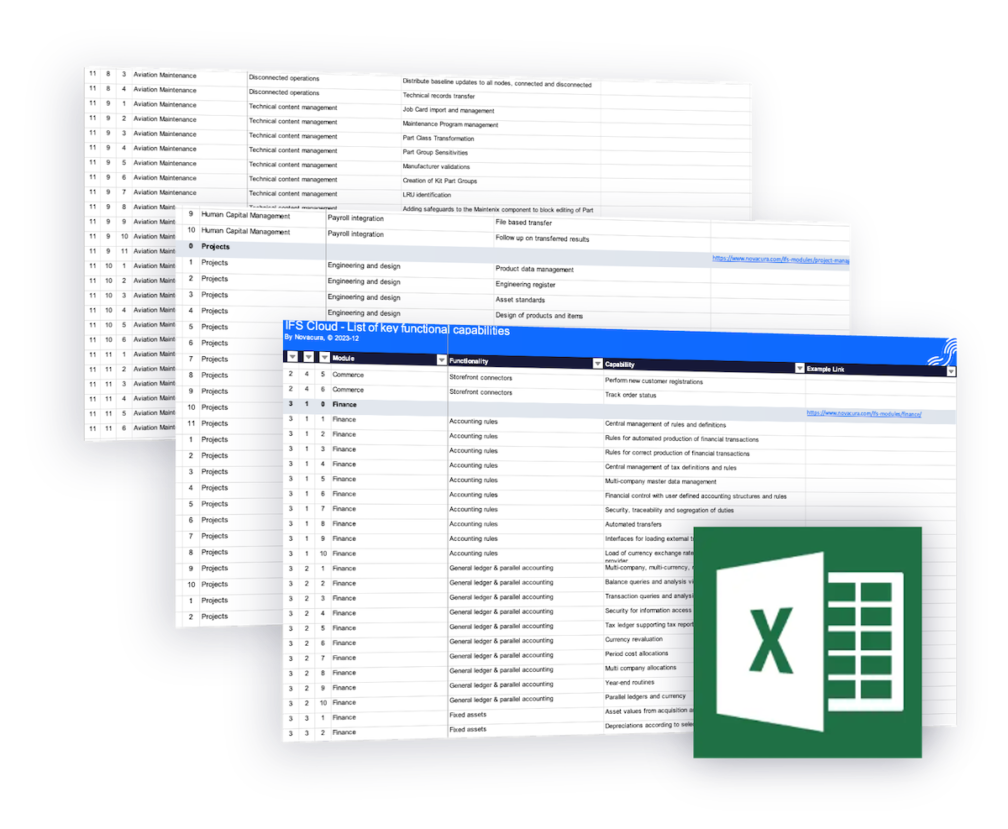
List of IFS Cloud Modules, Functionality and Key Capabilities
Explore 11 modules, 90 functionalities, encompassing a diverse range of 765 capabilities. Download the list highlighting the key functional capabilities provided by IFS Cloud (2023-R2). Novacura – Trusted by 220+ Companies.


CONTACT OUR EXPERT:
Looking for personalized advice? Feel free to ask Östen about how Novacura can tailor solutions to your business. Fill out the form, and we’ll get back to you shortly!