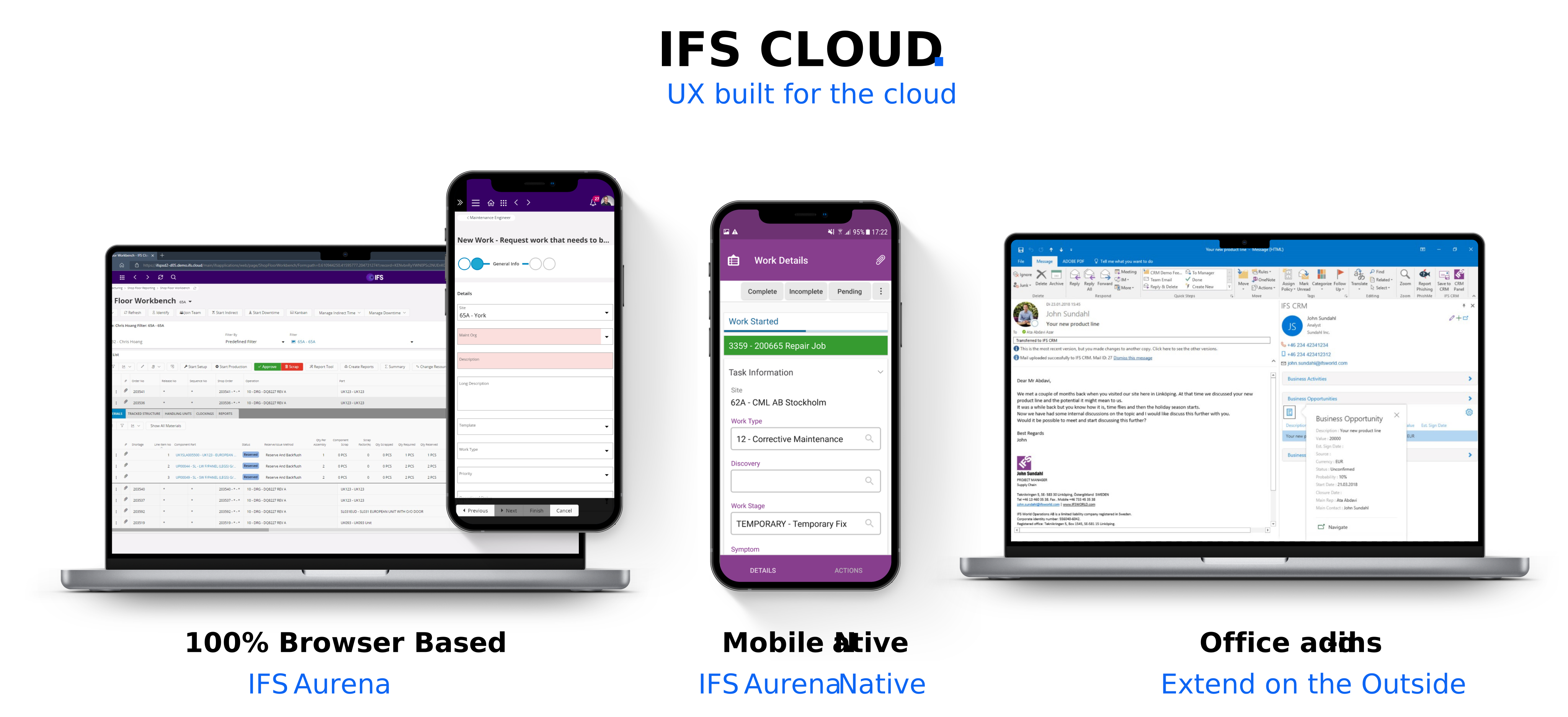
Answering the question about whether it's worth upgrading now: Yes, it's better to start working with IFS Cloud now and be part of its development!
Introduction
In our previous articles, we covered the business strategy and the technical “plumbing” of an IFS Cloud upgrade. But even the most perfect technical setup will fail if the organization isn’t ready to embrace it. Moving to IFS Cloud requires more than just training on a new interface – it requires a fundamental shift in how your company thinks about software.
In this episode, we explore the organizational hurdles of the transition. We discuss how to bridge the competency gap and how to prepare your team for the “Evergreen” world, where updates are no longer a rare event, but a continuous journey.
Meet the Experts
Host: Łukasz Majer, Business Solutions & Marketing – (LM)
Experts: Klas Klasman, Project Office Director – (KK) and Östen Westman, Sales Director – (OW)
Navigating the "Evergreen" Mindset
LM: The term “Evergreen” is a pillar of IFS Cloud, meaning the system is constantly updated. However, for many organizations used to “freezing” their system for years, this sounds exhausting. Klas, how do you manage this organizational shift?
KK: You’ve hit the nail on the head. Historically, an ERP upgrade was a “big bang” event every 5 to 7 years. You did the project, then you forgot about it for half a decade. With Evergreen, that cycle is broken. You now receive updates twice a year.
The challenge is organizational: you need a permanent “Release Management” mindset. This means your Super Users can’t just go back to their daily jobs and forget the ERP. They need to proactively review change logs and test new features in a sandbox environment regularly. It sounds like more work, but it’s actually about “small steps” instead of “giant leaps.” It prevents your business from ever becoming obsolete again, but it requires a culture that values continuous improvement over static stability.
LM: Does this mean companies need to change their internal support structures to keep up with these updates?
KK: Absolutely. You need a dedicated rhythm. We recommend setting up a permanent “IFS Cloud Steering Committee” that meets not just during the project, but throughout the year. Their job is to look at the upcoming IFS roadmap and decide which new features will actually drive value for the business, rather than just reacting to technical updates.
Why IFS Cloud?
Summary of the Section – for more details, check Episode 4 of our webinar!
The Competency Gap:
- Identifying the new technical and functional skills required for the Aurena (web) client.
- Shifting Super Users from “implementation roles” to “continuous improvement roles.”
User Adoption Strategies:
- Using early live demos and hands-on “sandbox” testing to reduce fear of the new UI.
- Moving away from traditional manuals toward role-based, intuitive screen configurations.
Embracing Evergreen:
- Establishing a permanent release management process to handle bi-annual updates.
- Shifting the organizational culture from “frozen” systems to continuous evolution.
Data Ownership:
- Moving the responsibility for data quality from the IT department to the business process owners.
- Using the upgrade as an opportunity to map and improve business data structures.
The Novacura Methodology:
- LeveragingNovacura Flow to create simplified, user-friendly interfaces that drive adoption.
- A “business-first” approach that prioritizes user feedback and process agility over rigid technical implementation.
The Novacura Methodology: Facilitating The Organizational Shift
LM: Preparing a whole company for such a change is daunting. Östen, how does Novacura help clients manage this organizational transition, and why is our approach different?
OW: Many partners focus solely on the “Go-Live” date. At Novacura, we focus on “User Empowerment” from day one. We know that if users feel the system is being “done to them” rather than “for them,” they will resist.
Our methodology is built around early involvement. We don’t wait until the end of the project to show the users the system. We use Novacura Flow to build role-specific applications that sit on top of IFS, making the new Aurena interface even more intuitive. Because Flow is low-code, we can sit down with a warehouse manager or a maintenance lead and tweak the user interface in real-time based on their feedback.
This creates “ownership.” When users see that the system actually makes their specific job easier—and that their feedback was implemented within hours, not months – the organizational resistance disappears. Choosing Novacura means you aren’t just buying a migration; you are buying a change management framework that ensures your team actually wants to use the new system. We bridge the gap between “technical capability” and “daily reality.”
CONCLUSIONS
In summary, the organizational shift to IFS Cloud is not a one-time hurdle, but a new way of living with your ERP. Success depends on moving away from a “project mindset” toward an “Evergreen mindset.” By empowering your users and partnering with an expert like Novacura – who prioritizes user experience through low-code flexibility – you turn organizational resistance into a powerful engine for continuous growth.
Upgrade Your System: Free Checklist & Support
Need help with your system upgrade? Download our free checklist to guide you through the process. Enter your email to get the download link.
Efficient Upgrades in Two Weeks
Consider our professional support for a smooth upgrade. We provide a clear strategy and thorough audit to meet your needs.
ARTICLES AND Webinars in the Serie
- Episode 1: Why is it Worth Upgrading?
Blog
Webinar - Episode 2: What are the Possible Upgrade Strategies?
Blog
Webinar - Episode 3: Observed Challenges and Proposed Solutions – Technical
Blog
Webinar - Episode 4: Observed Challenges and Proposed Solutions – Organizational
- Episode 5: How to Plan the IFS Upgrade Project
Join us to stay updated and learn more about the benefits and strategies for a successful transition to IFS Cloud!