Novacura Flow Quarterly News: Q1 2026 Highlights
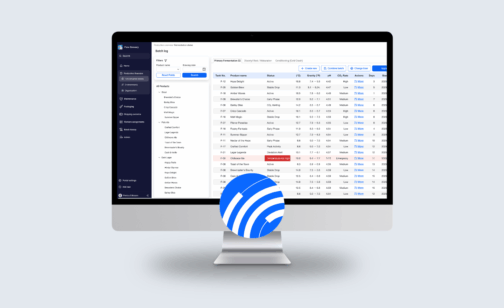
The Q1 2026 update for Novacura Flow has arrived, showcasing a major leap forward in ERP system expansion. This quarter, the focus is squarely on the transition to Flow Connect, the introduction of Generative AI, and streamlining the migration path for IFS Cloud customers. Here is a breakdown of the most significant updates from the March 27th session. The Rise of Generative AI in ERP: From Prompt to Wireframe The new Flow Builder is Novacura’s first step into generative AI. It allows developers to describe a business need in natural language, which the AI then uses to generate a functional wireframe, including automatic IFS Cloud OData API integrations. Flow Builder (Generative AI): This new tool allows developers to create application wireframes in seconds using natural language. By describing a workflow, the AI generates the logic, handles clarifying questions like a consultant, and can even write Flow Script for IFS Cloud OData integrations. AI-Powered Translations: Located within the new “Phrase Book” assets, you can now request instant Swedish (or other language) translations for entire applications or individual missing cells. Flow Connect & The New Web Designer Starting April 1st, 2026, the Web Designer becomes the default for all organizations in Flow Connect. No Installation Required: Move away from thick-client Windows installations to a fully browser-based experience. Important Note: Applications committed in the Web Designer cannot be reopened in the older Windows designer. Plan your team’s transition accordingly. Solving the IFS Cloud Migration Puzzle For customers moving to IFS Cloud, Novacura introduced two powerful “killer apps”: IFS Comparison Tool: This tool scans your existing workflows and compares them against different IFS versions. It highlights exactly which APIs or OData methods have changed, giving you a clear CSV report of what needs to be fixed for your next upgrade. PL/SQL to Flow Script Converter: A breakthrough for migrations, this tool uses AI to convert legacy PL/SQL blocks into modern Flow Script and OData calls. It targets an 80% automation rate for common workflow steps, significantly reducing manual consulting hours. New Technical Capabilities Local Storage: A game-changer for offline apps. It allows data manipulation directly on the device (offline) that persists across different apps within the same session. Expanded Connectors: The addition of ODBC (accessing MySQL, PostgreSQL, etc.), FTP, and OPC UA (for shop floor IoT devices) bridges the gap for customers migrating from Flow Classic. Octa Integration: Native support for Octa login is now available for identity management. Flow Classic: The Road Ahead While the focus is on Flow Connect, Novacura remains committed to Classic users. Standard Support: Continues through the end of 2026. Restricted Support: Begins Q1 2027 and ends September 30th, 2027. Transition: For those who must remain on-premises, Flow Connect Edge is slated for release in Q4 2026. Marketplace Updates: Now Free for Everyone In an effort to expand the community, Novacura has introduced a Free Plan for the Marketplace. Even without an active subscription, users can now access basic applications, tutorials, and supportive tools to learn the platform. New Marketplace Highlights: AI Lead Capture: An app that lets you scan […]
learn more
Novacura at IFS Sales kickoff (SaKo) 2026
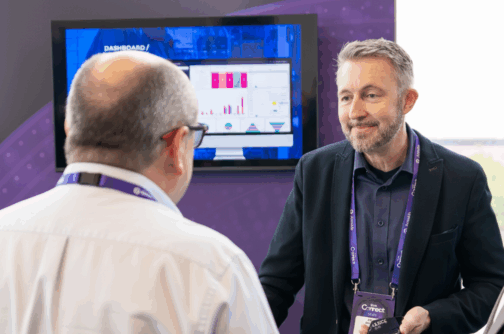
Novacura participated in the IFS Sales Kick-Off (SaKo) 2026 in Dallas, Texas—one of the key events in the IFS ecosystem. The summit highlighted the shift from traditional ERP to Autonomous Industrial AI and showcased strategic priorities like AI-driven sales, digital workers, and partner-driven growth. Insights from the event reinforce Novacura’s role in helping customers bridge advanced IFS AI capabilities with real-world operational needs using Novacura Flow.
learn more
How usability is the key to ERP efficiency – Insights from Aksel Jarlbäck
Usability is becoming the defining factor in ERP efficiency. In this interview, Aksel Jarlbäck explains how Novacura is transforming the Infor M3 experience by making business applications intuitive, user‑friendly, and adaptable.
learn more
Novacura Flow Quarterly News – Q4 2025: Key Product Updates and Roadmap Insights
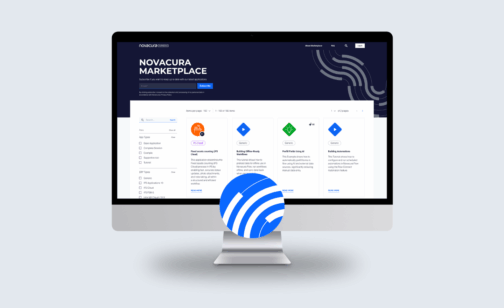
On December 5th, 2025, Novacura hosted its Q4 Quarterly News webinar to wrap up a year of significant transformation for the Novacura Flow Platform. This session provided users with a transparent view of the final 2025 updates, focusing on flow connect stability, AI-powered automation and the official launch of the new Marketplace Belów, we break down the main themes covered during the Q4 webinar, highlighting, how we’ve turned the promises of earlier quarters into reality, and what new key features our users can expect in 2026. Q4 Product release: Powering the Future with AI-driven insights and a new Marketplace experience Closing the year with a major leap forward, our Q4 update positions Flow Connect as a modern environment, delivering enhanced automation and an improved user experience: Seamless Offline and Async OperationsBuilding on the “Async” capabilities introduced the past, the Q4 update finalizes the offline client capabilities. The demo showcased a sophisticated logistics scenario where data preloading and background synchronization now happen with zero latency for the end-user. This ensures that Novacura Flow Connect is the premier choice for low-connectivity environments like remote sites or deep-storage warehouses. New Map PortletThe Map Portlet has been officially introduced to the Portal. This allows for advanced geographic data visualization directly within Custom Content Portals. Users can now view real-time asset locations or service routes on interactive maps and take action directly from the dashboard. Phrasebook: Centralized Translation ManagementThe Translation Management System (Phrasebook) is now fully operational Supporting ICU formatting, this feature allows developers to translate a statement once and reference it across all applications. This eliminates the need to translate the same phrase multiple times, ensuring a consistent, multilingual user experience globally. Marketplace: the new Platform is LIVE! The most anticipated update of Q4 was the official transition to the new Novacura Marketplace Platform: The Public Portal Features significantly better filtering by ERP system, a clear distinction between “Examples” and “Full Application Packages”. One Click Enabling The Transactional Part of the marketplace now allows for “one-click” app activation, deploying solutions directly into the environment. AI Powered Search Users can now find relevant applications among over 200 listings using natural language prompts (e.g., “Show me apps for mobile maintenance in IFS Cloud”). New Strategic Packages We officially released the Supplier Invoice Automation and Time Reporting for Regular Employees packages. The AI frontier: Flow Connect Co-Pilot The AI-Powered Flow Connect Co-Pilot is now available to help users with development questions through real-time chat. Whether you need help writing a specific Flow Script or understanding an error message, the Co-Pilot acts as an expert assistant built directly into the Workflow Designer, making onboarding to Flow Connect faster than ever. Automation: Intelligence at scale Novacura continues to streamline workflow modernization and migration capabilities: AI-Driven Automation Insights The Automation Analytics Dashboard introduced in Q2 has evolved. It now features the Data Analysis AI Copilot, which provides automated summaries of server-side runs. Instead of just monitoring success or failure, the AI now identifies performance trends and suggests optimizations for individual workflow steps. Security and ProvisioningTo support large-scale enterprise deployments, we have introduces […]
learn more
Novacura Flow User Conference 2025: Key Takeaways and Highlights
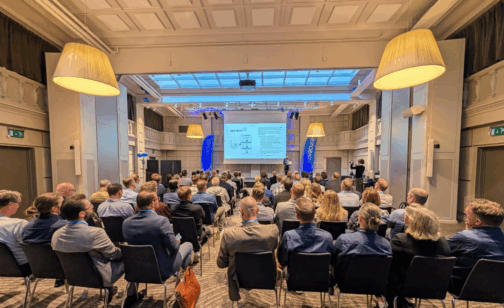
On October 1–2, 2025, the historic Clarion Hotel Post in Gothenburg once again became the epicenter of the Flow Users Ecosystem. The Novacura Flow User Conference 2025 brought together customers, partners, and experts for two days of intensive learning, networking, and a first-hand look at the future of business automation. Following the success of last year’s event, the 2025 edition raised the bar with a stronger focus on AI Agents, Flow Connect maturity, and highly requested hands-on training workshops. Highlights included: Variety of customer cases: This year we focused to deliver many various real-life customer use cases, so we could gain from their experiences and best practices. Hands-On Training and Empowering the Power User: In direct response to attendee feedback from 2024, we introduced a dedicated Hands-On Training track on Day 2. Led by our senior engineers, these sessions allowed users to Build their first Flow Connect App from scratch, practice migrating apps from Flow Classic to Connect and Integrate ERP systems using the latest Flow Script Modules. Networking and Connection: The conference wasn’t just about code; it was about the community. During the “Networking Discovery Sessions” and coffee breaks, ideas were exchanged and new partnerships were formed. The rise of AI Agents: One of the most anticipated sessions was the introduction of AI Agents Implementation, a new service offered by Novacura. We moved beyond simple chat-bots to showcase how AI can act as an autonomous layer within you workflows, handling complex data analysis and decision making directly within Flow runtime. An Inspiring Lineup Customer Case: Retail Excellence in Action – Mio’s Approach to everyday efficiency using Novacura Flow Tobias Larsson and Pontus Leander from MIO, presented a powerful customer case study. They detailed how MIO achieved Retail Excellence by leveraging Novacura Flow to enhance everyday efficiency, optimize internal processes, and streamline operations in a dynamic retail environment. What’s New in Flow Connect Hub and Client Malin Johannson and Andreas Bergen showcased the latest enhancements to the Flow Connect Hub and Client. They unveiled new features designed to boost performance and improve user experience, demonstrating how these updates maximize the power and flexibility of Novacura Flow. What’s New in Flow Connect Portal Malin Johannson and Ola Carlander provided an in-depth look at the newest features implemented in the Flow Connect Portal. They highlighted how the updated portal offers superior management capabilities and introduces tools that make application deployment and user administration simpler and more intuitive. Novacura Flow Roadmap and Strategy Overview Paul Phillips presented the high-level Flow Roadmap and Strategy Overview. He shared Novacura’s vision for the future of the platform, outlining strategic priorities for the next few years and discussing key areas of investment to meet evolving market demands in the ERP sector. AI Agents Implementation – new service offered by Novacura Homan Elfström introduced the groundbreaking AI Agents Implementation service. This session detailed how Novacura is integrating cutting-edge AI capabilities into the Flow platform, explaining the scope of this new offering and showcasing its potential to revolutionize business process automation. What’s new in Novacura Marketplace […]
learn more
7 Key Advantages of Implementing ERP in the Mining Industry
Mining demands huge upfront investment. Running a mine means managing expensive machinery, juggling complicated supply networks, meeting tough safety and environmental rules, and dealing with unpredictable market prices. A lot of mines don’t hit their targets — not because the rock is bad, but because their systems don’t talk to each other and decisions get made in silos. This is where IFS ERP for the mining industry makes a difference. Purpose-built for asset-heavy operations, IFS ERP provides an integrated platform that connects people, equipment, and processes — from the pit to the boardroom. Together with low-code extensions through Novacura Flow, mining companies gain the agility to boost efficiency today while preparing for the future. Here are seven key advantages of implementing IFS ERP in mining operations: 1. Real-Time Visibility Across Operations IFS delivers real-time dashboards unifying information from drill rigs, trucks, processing plants, and finance departments. This mining software eliminates silos, so managers no longer waste hours chasing spreadsheets or making phone calls. Instead, they get instant insight into production rates, equipment health, and fuel usage. Such visibility helps spot trends before they become costly — like declining ore grades or rising fleet consumption. With IFS, mines can resolve production bottlenecks faster while reducing downtime that directly affects profitability. 2. Optimized Equipment Maintenance Mining assets like crushers and ultra-class haul trucks cost millions. Unplanned breakdowns are profit killers. IFS ERP software for mining production includes advanced Enterprise Asset Management (EAM) that uses predictive analytics, automated scheduling, and complete maintenance histories. The result: fewer emergency repairs, longer component life, and annual savings reaching millions for mid-sized operations. Facilities can schedule interventions during planned windows, ensuring availability remains high. 3. Stronger Supply Chain and Logistics Control Mining supply chains span the globe — from explosives and tires to shipping concentrate overseas. An ERP like IFS shows a live, end-to-end view of orders, shipments, and stock. It also predicts what you’ll need from production and maintenance plans, helping you avoid stockouts. For outbound moves, it plans truck routes, rail slots, and port bookings to cut costs and keep output on schedule. 4. Integrated Financial and Project Management Finance in this sector is complex: royalties, multi-currency transactions, hedge accounting, and strict reporting requirements. Implementing IFS consolidates all information into a single financial truth. Automated royalty calculations, real-time cost per ton tracking, and project profitability analysis become standard. Activity-based costing even allows managers to compare expenses down to individual pits or blast patterns — supporting smarter, data-driven investment decisions. 5. Compliance, Safety, and ESG Management From regulations to environmental permits, compliance failures can stop production instantly. IFS automates these workflows with certification tracking, incident reporting, inspection scheduling, and full audit trails. The system also supports ESG reporting by monitoring emissions, waste management, and water quality. Mining industry software solutions like IFS ensure operations remain compliant, safe, and aligned with stakeholder expectations around sustainability. Why ERP implementations fail? Set the ERP implementation team Create an effective change management plan Communicate with diverse groups Download 6. Data-Driven Decision-Making and Predictive Analytics Facilities […]
learn more