 February 14, 2022
  3 min to read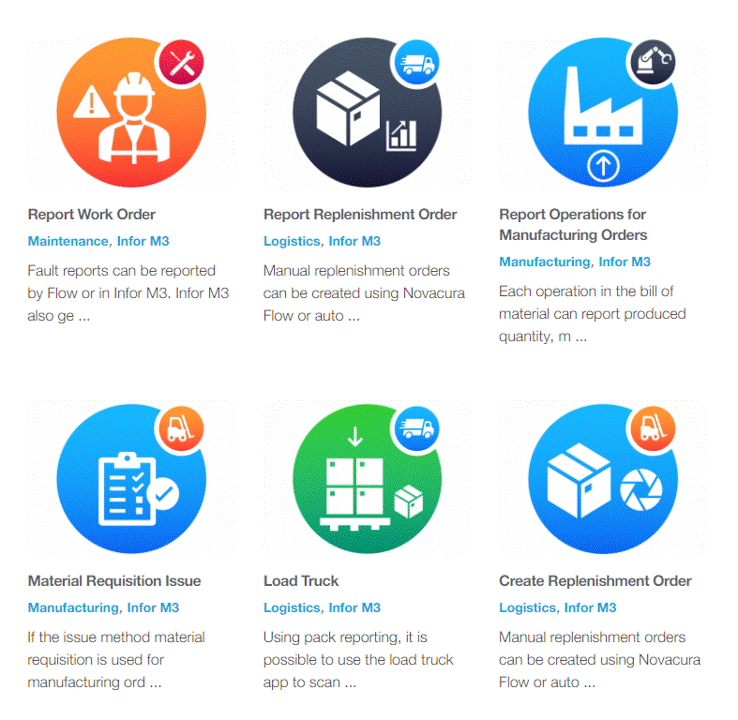
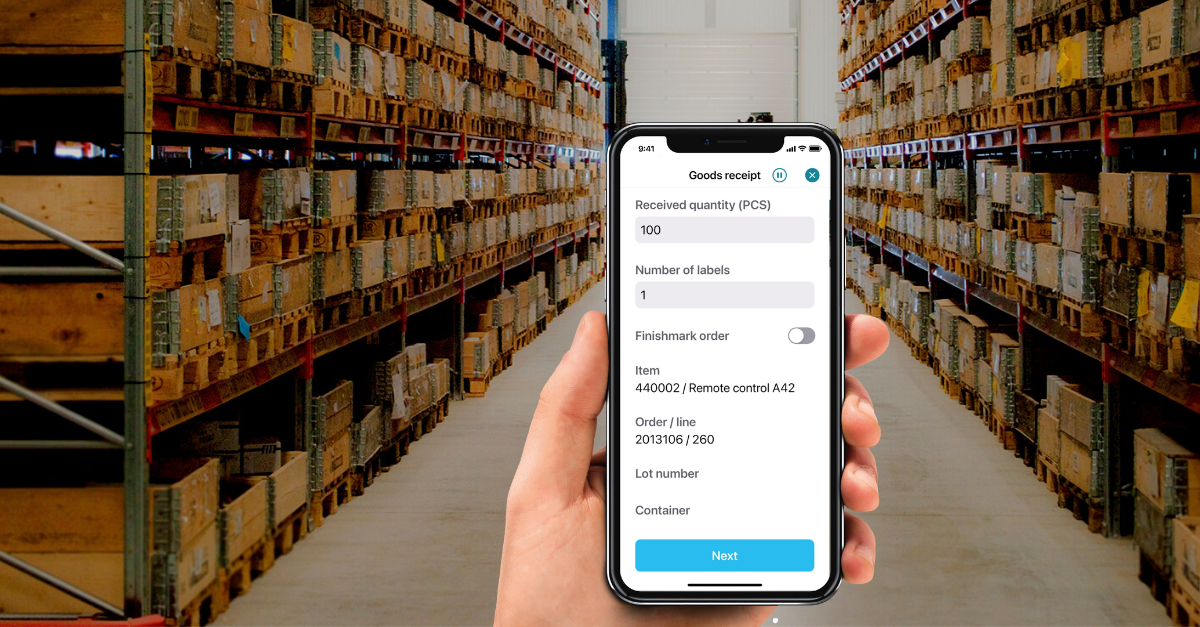
Below we present screenshots from some of our warehouse applications for Infor M3: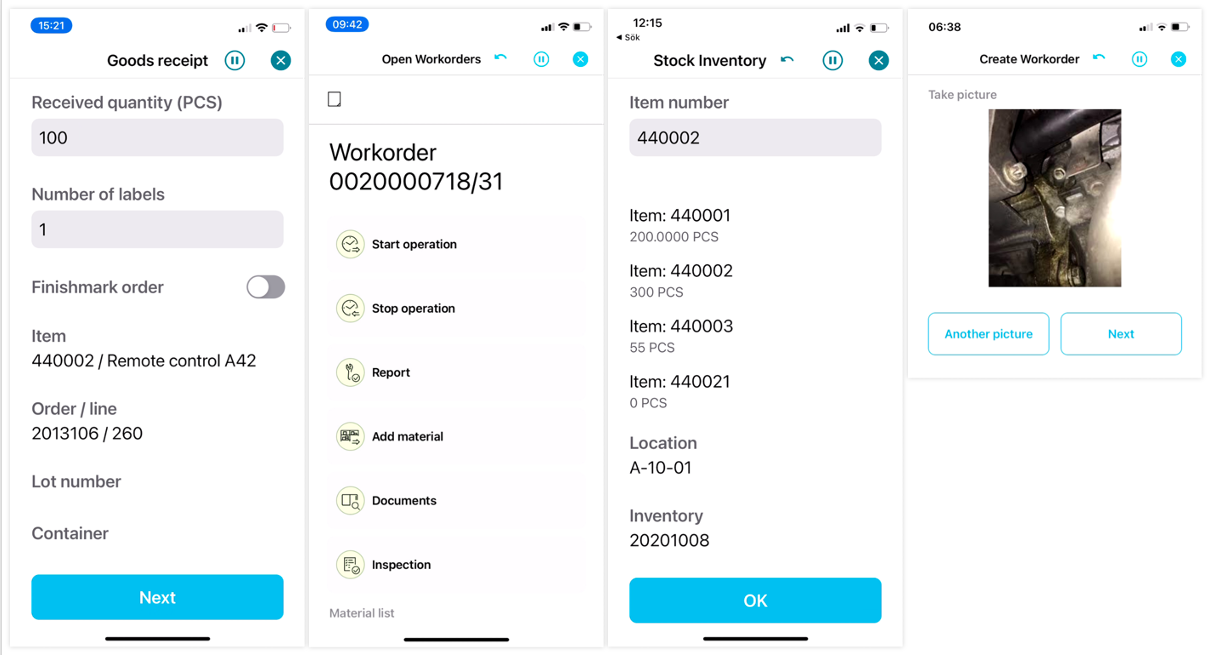
Related articles
:
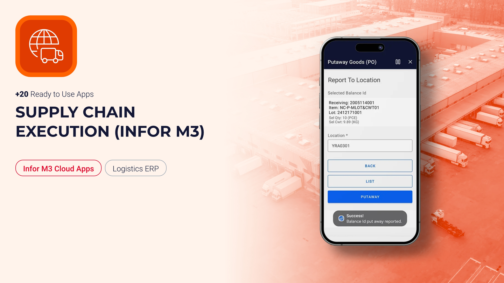

Talk to any warehouse manager running Infor M3 and you’ll hear a version of the same story: the system is right, but it’s the last one to know. A pick gets confirmed on the floor, but it doesn’t hit inventory until someone keys it in from a desk-bound terminal twenty minutes later. A putaway location shows “available” on screen because the physical move hasn’t been logged yet. M3 isn’t wrong — it just hasn’t been told yet. That lag between physical execution and digital record is where operational resilience breaks down, and closing it means rethinking how execution data reaches the ERP in the first place, not rethinking the ERP. What Supply Chain Execution Truly Means Supply Chain Execution (SCE) is not merely about moving inventory from point A to point B; it is the real-time synchronization of physical material movement with your digital record. It represents the precise moment a purchase order becomes a physical item on a shelf, or a sales order changes into a packed container ready for dispatch. For logistics and manufacturing managers, SCE is measured by rigid KPIs: order accuracy, dock-to-stock lead times, cycle-count accuracy, and total throughput velocity. How Infor M3 Manages Execution Infor M3 is an incredibly robust ERP engine designed to handle complex multi-site planning, financial allocations, and deep transactional logic. Infor also offers native mobile options like Factory Track for warehouse transactions — but these are built around fixed, out-of-the-box workflows that rarely match a facility’s exact SOPs without heavy configuration effort. The real problem is data lag. When those native workflows don’t fit and operators fall back on paper pick-lists, manual logs, or desk-bound terminals to input stock updates, a disconnect forms. The physical floor reality moves faster than the ERP data entry, creating downstream discrepancies, misallocated stock, and artificial production bottlenecks. Why Use the Supply Chain Execution App Package? To close this operational gap, Novacura developed a dedicated Supply Chain Execution application package for Infor M3. This pre-built suite covers inbound, inhouse, and outbound warehouse operations with mobile-friendly applications built specifically for M3’s logistics processes. Rather than attempting to replace or heavily customize Infor M3, this package acts as a process-optimizing low-code layer. It translates complex M3 programs into sequential, conditional steps tailored specifically for an operator holding a mobile device or industrial scanner on the floor. Visit Marketplace How Novacura Apps Interact with Infor M3 The architecture is built for direct connectivity and security. The execution suite connects natively to your ERP through the secure Infor M3 REST API. When an operator scans a barcode or confirms a movement, the transaction is processed via the M3 bulk API in real time. There’s no middleware layer and no third-party database replicating your data — M3 remains the single, definitive source of truth, updated instantly at the point of performance. Furthermore, if standard features fall short, these templates can be easily modified inside the Novacura Flow low-code platform to match your exact standard operating procedures (SOPs). End-to-End Warehouse Mastery The application package covers the full warehouse journey, split cleanly across three fundamental operational phases. Phase I: Receiving […]
Talk to any production manager running Infor M3 and you’ll hear a version of the same story: the ERP logic is right, but it’s always the last one to know. An operation finishes on the line, but the run time isn’t logged until the operator walks back to a desk-bound terminal an hour later. Material is physically consumed at the workstation, but the digital balance stays untouched because the standard M3 screens are too rigid for one-handed, glove-on entry in a noisy plant. M3 isn’t wrong — it just hasn’t been told yet. That lag between physical execution and digital record is where production efficiency KPIs quietly erode, and closing it means rethinking how shop-floor data reaches the ERP in the first place, not rethinking the ERP. What Manufacturing Execution Truly Means Manufacturing Execution is not merely about producing goods; it is the real-time synchronization of what physically happens at the workstation with what your ERP believes is happening. It is the precise moment a component is issued to a manufacturing order, an operation is reported complete, or a finished pallet becomes available stock ready for the next process. For production and plant managers, it is measured by unforgiving KPIs: operation-time accuracy, material consumption variance, first-pass yield, order confirmation lead time, and overall shop-floor throughput. Every one of those numbers depends on a single condition — that the reporting happens at the point of work, not at the end of the shift. How Infor M3 Handles Shop-Floor Execution Infor M3 is a robust ERP engine, designed for complex multi-site planning, deep manufacturing order logic, costing, and traceability. The transactional foundation is genuinely strong. The friction appears at the interface. The standard M3 client was built for a desk, a mouse, and a full keyboard — not for a scanner in a gloved hand next to a running machine. Infor’s native mobile options exist, but they are built around fixed, out-of-the-box workflows that rarely match a plant’s exact SOPs without heavy configuration effort. When those workflows don’t fit, operators fall back on the oldest tools in the building: paper travelers, tally sheets, and a shared terminal at the end of the aisle. The floor moves faster than the data entry, and the result is a familiar set of downstream symptoms — material planning driven by stale balances, operation times that arrive too late to act on, and rework discovered long after the batch has moved on. Why Use the Manufacturing Execution App Package? To close this operational gap, Novacura developed a dedicated Manufacturing Execution application package for Infor M3. This pre-built suite covers the manufacturing order lifecycle with mobile-friendly applications built specifically for M3’s production processes — spanning inhouse and shop order-related workflows across most of the crucial steps on the production floor. Rather than attempting to replace or heavily customize Infor M3 — which risks system stability and complicates future upgrades — the package acts as a mobile, offline-capable workflow execution layer. It translates complex M3 programs into sequential, conditional steps tailored specifically for an operator holding an industrial scanner or a phone at the line, guiding them task by […]
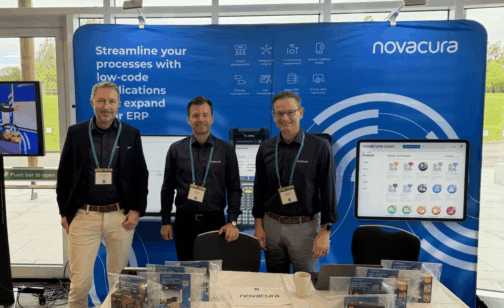

The modern manufacturing and logistics landscape requires absolute harmony between core enterprise resource planning and rapid, physical floor execution. For enterprises running Infor M3 or transitioning to Infor CloudSuite, evaluating how well software supports actual day-to-day work remains a continuous priority. To address these critical realities, the 2026 M3 User Association (M3UA) UK Conference took place over two days at the Hilton St. George’s Park in Burton Upon Trent, UK. As an event designed to foster heavy participation through workshops, roundtables, and technical presentations, it serves as a premier venue for exchange between M3 users, suppliers, and Infor experts. Novacura is proud to support this community as a Golden Sponsor, welcoming attendees to Booth 4 to discuss practical process improvement rather than theoretical technology hype. The High Cost of the “Last Mile” of Data In asset-intensive sectors like manufacturing and distribution, a recurring operational vulnerability exists: the gap between desired business processes and the exact functionality currently supported within the central ERP. While core systems handle broad financial data and massive material requirements planning excellently, they frequently lose traction at the edge of operations. This disconnect represents the “last mile” of data, and it is often the most expensive square foot of a facility. When warehouse management, shop-floor production reporting, or field maintenance operations are left outside the direct reach of the ERP, organizations face immediate inefficiencies. Workers are forced to rely on manual spreadsheets, paper-based tracking, or analog workarounds. This absence of direct connectivity introduces data-logging delays, spikes inventory error rates, and severely degrades overall supply chain visibility. Organizations cannot afford blind spots on the factory floor; to optimize lead times, the operational execution layer must align perfectly with the central digital record. Extending the Core Without Custom Modification The solution to this execution gap is not to abandon or heavily customize the central system. Custom modifications introduce high long-term costs and jeopardize future upgrade paths to Infor CloudSuite. Instead, Novacura provides a technical bridge through Novacura Flow. By acting as a flexible, process-optimizing workflow layer, Novacura Flow extends Infor M3 beyond its traditional core. It links complex enterprise data structures directly to real operational execution via intuitive mobile and web applications. Instead of forcing technicians and operators to adapt to rigid ERP transaction codes, Novacura Flow shapes the system to the user’s natural physical workflow. This targeted extension eliminates analog bottlenecks, enforces automated data validation at the point of origin, and turns standard ERP constraints into distinct operational advantages. Mobile Workflows, Process Efficiency, and Embedded AI Services A central highlight of our participation at the M3UA UK Conference was a dedicated strategy session designed to show exactly how this architecture operates in practice. Date & Time: May 12 at 15:00 Presentation Title: “Novacura: Extending Infor M3 with Modern Mobile Apps, Workflows, and AI Services” This session moved past theoretical technology concepts to present a practical, technical deep dive into extending your current M3 ecosystem. We demonstrated how practical AI services can be embedded directly into standard mobile processes to reduce human error. Specifically, we showcased an AI-assisted […]
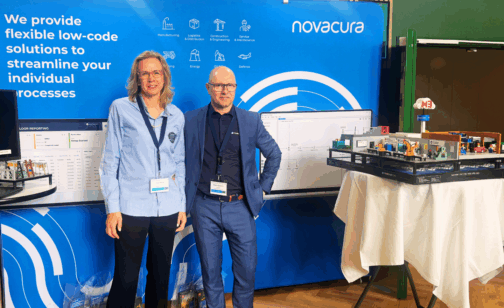
The Infor M3 ecosystem is evolving rapidly, demanding a delicate balance between robust core ERP stability and rapid frontline adaptability. On April 15–16, 2026, the local and international M3 community converged at the LEGOLAND Hotel & Conference in Billund for the M3 User Group Denmark Conference 2026. As one of the premier M3 events in Denmark, it brought together approximately 150 users, system experts, and industry leaders for two intensive days focused on knowledge sharing, peer networking, and the future of digital transformation. For Novacura, the conference provided the perfect forum to address the most pressing question facing asset-intensive businesses today: How do you eliminate the operational disconnect between your central ERP and your daily floor operations? The ERP Execution Gap in Modern Logistics and Manufacturing Many manufacturing, distribution, and logistics enterprises run their core processes on Infor M3. It is a powerful engine for managing complex enterprise data. However, a significant business inefficiency often arises right at the edge of the system—where the digital data must interact with physical execution. Whether a company is navigating a highly strategic migration to M3 CloudSuite or pushing to extract maximum performance from an established on-premise installation, the “ERP execution gap” remains a persistent threat. Standard ERP user interfaces and rigid out-of-the-box workflows can overwhelm floor operators, leading to manual workarounds, delayed production reporting, and degraded supply chain visibility. When data input lags behind physical movement, operational KPIs suffer. To stay competitive, organizations cannot afford a disconnected workforce; they need an agile layer that translates ERP complexity into streamlined, error-free execution. Novacura Flow as the Factory’s “Nervous System” At our distinct blue booth in Billund, Novacura demonstrated exactly how to bridge this gap. Rather than relying on conceptual slides, we brought a physical solution to life: the Novacura Full LEGO Factory. This fully operational, small-scale model served as a concrete demonstration of how Novacura Flow orchestrates every aspect of a production facility. Visitors watched in real time as the low-code platform managed tasks ranging from inbound logistics to shop-floor production reporting, feeding critical updates instantly back into the ERP environment. By acting as the functional “nervous system” of Infor M3, Novacura Flow ensures that physical actions on the warehouse or factory floor trigger immediate, automated digital updates. It replaces rigid data entry with intuitive, mobile-first workflows designed around the user’s specific daily tasks. And, fittingly for an event hosted in the birthplace of the iconic building block, visitors who stopped by to see the factory model left with a small LEGO gift to take home. Meet the Experts: Designing Your Digital Roadmap The core value of the M3UG Denmark Conference lies in strategic dialogue. Our onsite team spent two days engaging with operations and IT managers to help them evaluate their technology roadmaps: Helle Mering, Regional Manager for Continental Europe Mattias Nydestam, Senior M3 Consultant The consultations focused heavily on how to achieve digital transformation without introducing risk. For companies planning a transition to M3 CloudSuite, our experts discussed how Novacura Flow protects custom logic, allowing businesses to migrate the core ERP cleanly while keeping […]
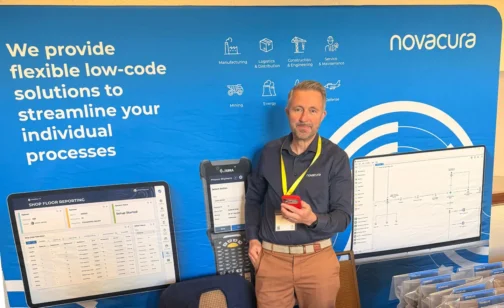
At the 2026 M3UGA Spring Conference in Tempe, Arizona (March 23–25), where Novacura participated as a sponsor, it became clear to the North American Infor M3 community that closing this gap is no longer a luxury – it is a strategic necessity. In ERP-driven operations, the distance between system capabilities and operational reality is where most efficiency is lost. A Growing Community Of Experts As Jared Burton, Sales Representative at Novacura North America, noted: “The 2026 M3UGA Conference was another fantastic event, driven by dedicated organizers invested in helping customers get the most out of their M3 environments.” For Novacura, this marked our third year of participation. We have moved beyond being just a participant to becoming a strategic voice for organizations struggling with the rigid structures of legacy ERP setups. The energy in Arizona confirmed that the M3 community is hungry for solutions that offer agility without compromising the core integrity of their Infor environment. The Agenda: Modernization And Strategic Agility The conference, held in Tempe, focused heavily on the transition toward Infor CloudSuite and the optimization of on-premise environments. Key themes included: The Cloud Journey: Strategies for migrating while maintaining business continuity. Data Integrity: Ensuring “one version of the truth” across global supply chains. User Experience: Moving away from complex “green screens” toward intuitive, process-driven interfaces. From the Stage: Bridging the ERP Execution Gap – Novacura Customer Case Presentations At the recent Annual M3 User Group Conference, Novacura highlighted a fundamental truth facing modern industrial enterprises: the ERP system itself is rarely the problem—the friction lies in how people interact with it. Through two distinct session deep-dives, we explored how a low-code layer can dismantle the “villains” of system complexity and data latency. Session 1: Bridging the High-Volume Data Gap In high-stakes environments – such as seasonal harvest or large-scale raw material intake – operational efficiency is often threatened by fragmented data and steep training barriers. The Challenge: Traditional ERP interfaces often require “too many screens and too many clicks” for simple data entry. For seasonal staff with limited training windows, this complexity creates a “training gap” that results in data latency and inaccurate inventory visibility. The Technical Bridge: Rather than resorting to risky core modifications, the solution involves deploying a low-code integration engine. By using a simplified mobile interface, workers can execute complex transactions – such as logging IDs and attributes – via a single, clean screen that communicates directly with ERP APIs. The Result: This approach achieves real-time accuracy without the “administrative burden.” Companies gain the ability to deploy applications with minimal time-to-value, ensuring that even a temporary workforce can contribute to a 100% compliant data capture process. Session 2: From “Ghost Data” to Precision Field Service For organizations managing heavy machinery and field-based support, the “villain” is often a reliance on manual, analog reporting that hides critical KPIs. The Challenge: When technicians capture time and meter readings in Excel or on paper, “ghost data” (delayed or disconnected information) paralyzes maintenance planning. This lack of real-time visibility often leads to system duplication, where staff use external tools to track […]
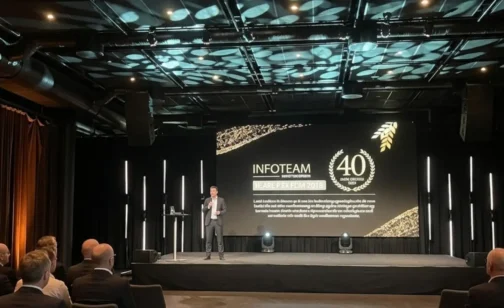
Another year at Infoteamdagene has confirmed that the Norwegian industrial landscape is at a crossroads. As we gathered for the 2026 edition – marking another consecutive year of Novacura’s proud sponsorship of this vital community – one theme resonated louder than any technical update: the growing friction between ERP complexity and operational reality. Beyond our role as sponsors, we had the privilege of presenting a live look into how leaders are solving this friction. Our session, “How Møre Trafo Synchronized Production, Logistics, and Quality with Novacura Flow,” demonstrated that when you align your ERP with your people – rather than the other way around – the results are transformative. Insights from the 2026 M3 Roadmap Infoteamdagene 2026 provided a clear view of the road ahead. Our team engaged with several key pillars of the current M3 ecosystem: Maximizing M3 Value: Strategies for squeezing every drop of ROI out of existing implementations while preparing for modernization. The Cloud Transition: Moving to the Cloud is no longer the “future”—it is the present. The focus is now on how to migrate without losing the unique competitive advantages built into your current processes. AI and Automation: The integration of AI is shifting from hype to high-level automation, particularly in Supply Chain and Finance. Technical Deep Dives: Exploring how modern APIs and extensions can finally allow for a “Clean Core” strategy. The “Reporting Lag” and the Complexity Barrier As was mentioned many times during the event, for many organizations running Infor M3, the ERP has become an administrative burden on the shop floor. When a reporting process is too complex to complete in the moment, operators revert to paper or delayed entries. This is the Complexity Barrier. By the time the data reaches the management dashboard, it is already “historical fiction,” leading to over-purchasing, inventory inaccuracies, and a loss of strategic control. 35% Claim Reduction and Strategic Control: The Møre Trafo Customer Case At Infoteamdagene 2026, Møre Trafo – Scandinavia’s premier manufacturer of distribution transformers – demonstrated how they shifted from “ERP-centric” thinking to “operational intent.” In a high-precision industry where technical deviations carry heavy financial risks, Møre Trafo needed a way to ensure that shop-floor reality perfectly matched their digital records. The Challenge: The Friction of Manual Oversight Despite a robust ERP, Møre Trafo faced a common “Complexity Barrier”. Vital quality data was often captured manually, creating a “reporting lag” that prevented proactive course correction. This fragmentation made it difficult to maintain full traceability and contributed to avoidable costs from non-conformity and claims. The Solution: The “Template-Block” Framework To eliminate this friction, Møre Trafo implemented a process-optimizing low-code layer using Novacura Flow. Instead of forcing technicians to navigate complex ERP screens, they deployed a “Template-Block” architecture that enforces engineering rules at the point of execution. This mobile-first interface guides workers through mandatory technical gates – such as pressure tests or specific measurements – ensuring that data is captured correctly the first time. If a technical tolerance isn’t met, the process stops, preventing defects from moving downstream. The Result: Strategic Control and a 35% Claim Reduction By moving their complex […]